Photo by Johnathan Kaufman on Unsplash
Rome and the Vatican
The heart of Catholic Christianity and a pilgrimage destination for nearly two millennia.
Associated traditions: Christianity
Rome’s status as a Christian pilgrimage destination rests on two foundational claims: that the apostles Peter and Paul were martyred there, and that Peter’s tomb lies beneath the high altar of St. Peter’s Basilica. Archaeological excavations conducted beneath the basilica in the 1940s and 1950s revealed a necropolis and a site venerated since at least the second century CE, though the identification of specific remains as Peter’s continues to generate scholarly debate.
The transformation of Rome from imperial capital to Christian pilgrimage center occurred gradually over the fourth and fifth centuries. Constantine’s legalization of Christianity in 313 CE and his subsequent construction of basilicas over the traditional sites of Peter’s and Paul’s burials created the architectural framework for pilgrimage. The Basilica of St. Peter, the Basilica of St. Paul Outside the Walls, and the Basilica of St. John Lateran — the cathedral of Rome — became the primary destinations for those seeking proximity to apostolic authority.
The cult of martyrs amplified Rome’s pilgrim appeal enormously. The Roman catacombs, underground burial networks used by early Christians, contained the remains of thousands of martyrs whose suffering during imperial persecutions gave them intercessory power in the eyes of the faithful. The itineraries compiled for seventh-century pilgrims reveal elaborate circuits of catacomb visits, each stop associated with specific saints and the miracles attributed to them.
Medieval pilgrimage to Rome peaked during Jubilee Years, first declared by Pope Boniface VIII in 1300. The Jubilee offered a plenary indulgence — complete remission of temporal punishment for sins — to those who visited Rome’s major basilicas during the designated year. The first Jubilee drew an estimated two million visitors, overwhelming the city’s infrastructure and demonstrating the extraordinary drawing power of spiritual incentives. Subsequent Jubilees, initially held every century and later every twenty-five years, continued to generate massive pilgrim flows that reshaped the city’s economy and urban fabric.
The Counter-Reformation of the sixteenth and seventeenth centuries produced a renewed emphasis on Rome as a pilgrimage destination. The construction of new churches, the restoration of ancient basilicas, and the development of processional routes created the monumental cityscape that pilgrims encounter today. The completion of St. Peter’s Basilica in its current form, the laying out of broad avenues connecting the major churches, and the installation of obelisks as visual waymarkers all served to reinforce Rome’s identity as the supreme destination of Catholic sacred travel.
The Vatican, an independent city-state of forty-four hectares, serves as the administrative and spiritual center of the Roman Catholic Church and its approximately 1.3 billion members. The Pope’s role as Bishop of Rome links the institution to the apostolic succession traced from Peter, making the Vatican not merely an administrative headquarters but a site of living sacred authority that pilgrims come to witness firsthand.
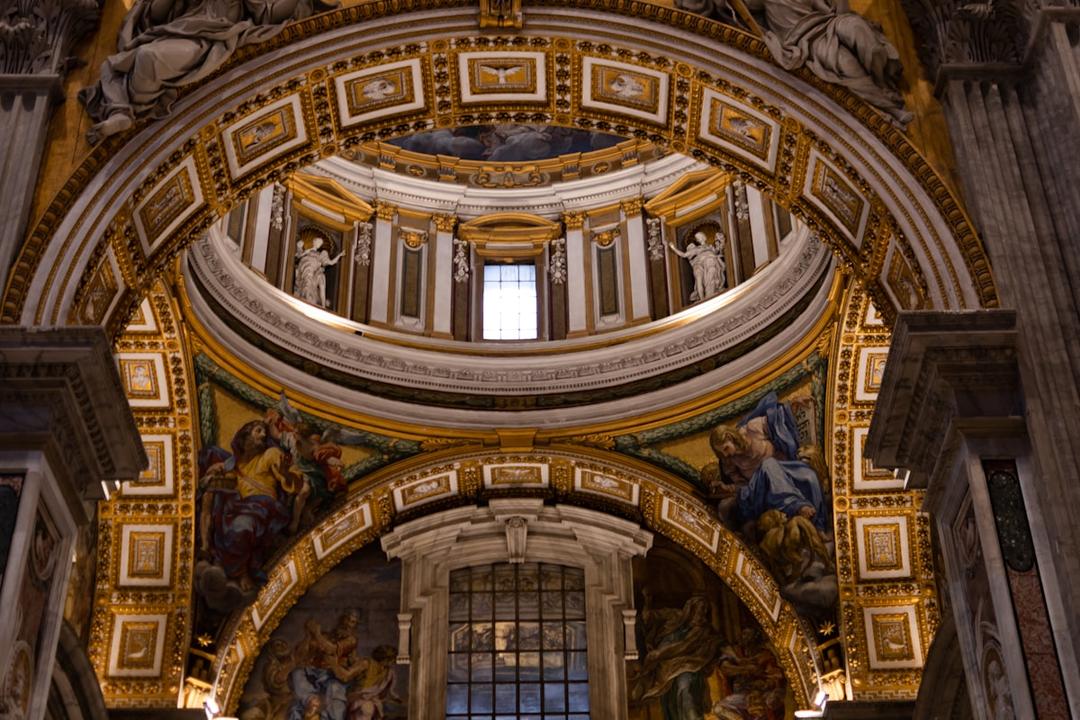
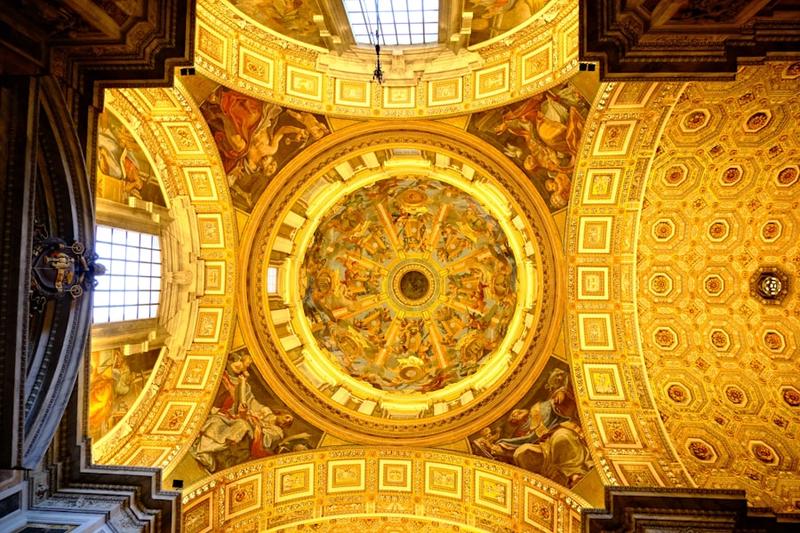
St. Peter’s Basilica, completed in its current form in 1626 after more than a century of construction, ranks among the largest churches in the world. Its design reflects contributions from Bramante, Michelangelo, Maderno, and Bernini, each architect adding elements that collectively create one of the most recognizable buildings on earth. Michelangelo’s dome, rising 136 meters above the floor, dominates the Roman skyline and serves as a visual beacon for approaching pilgrims just as it has for centuries.
The Sistine Chapel, within the Vatican Palace complex, houses Michelangelo’s ceiling frescoes (1508–1512) and his Last Judgment (1536–1541), works that rank among the supreme achievements of Western art. The chapel serves as the venue for papal conclaves, connecting artistic legacy with institutional continuity. Pilgrims and visitors queue daily for admission, the experience of viewing the ceiling combining aesthetic wonder with the weight of centuries of prayer and deliberation conducted beneath it.
Beyond the Vatican, Rome contains over nine hundred churches, many of which preserve relics, artworks, and architectural features spanning two millennia of Christian history. The Basilica of Santa Maria Maggiore houses a relic tradition associated with the Holy Crib. San Clemente reveals three layers of construction dating from the twelfth century back to the first. The Scala Santa, traditionally identified as the staircase from Pontius Pilate’s palace climbed by Jesus, draws pilgrims who ascend on their knees in devotion.
The Papal Audience, held weekly in St. Peter’s Square or the adjacent audience hall, provides an opportunity for pilgrims to see and receive a blessing from the Pope. For many Catholic pilgrims, this encounter with the living successor of Peter constitutes the emotional and spiritual climax of their Roman visit, transforming abstract theological claims about apostolic succession into a tangible personal experience.
A sweeping view of Rome with historic domes and rooftops
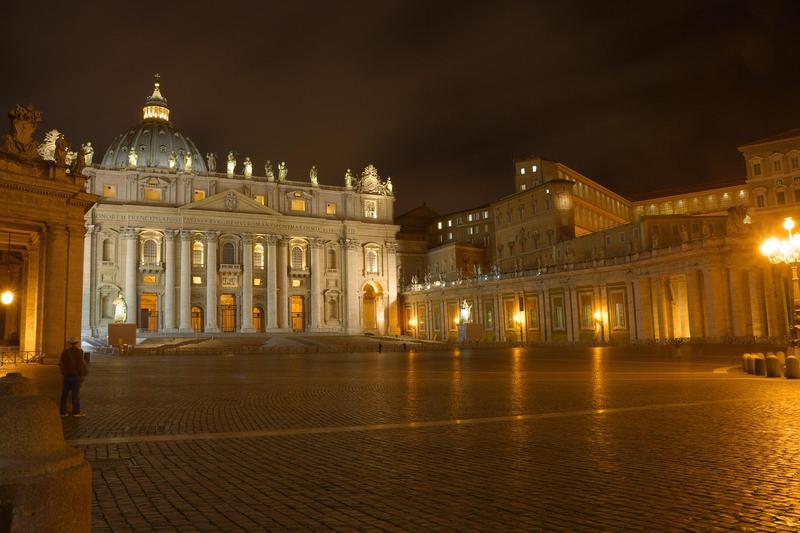
St. Peter’s Square, designed by Bernini and completed in 1667, welcomes pilgrims with its elliptical colonnades — 284 columns and 88 pilasters arranged in four rows, topped by 140 statues of saints. The design was intended to represent the embrace of the Church, with the arms of the colonnade reaching out to enfold the arriving faithful. At the center stands an Egyptian obelisk, brought to Rome by Emperor Caligula and repositioned by Pope Sixtus V in 1586, flanked by two fountains whose sound fills the square.
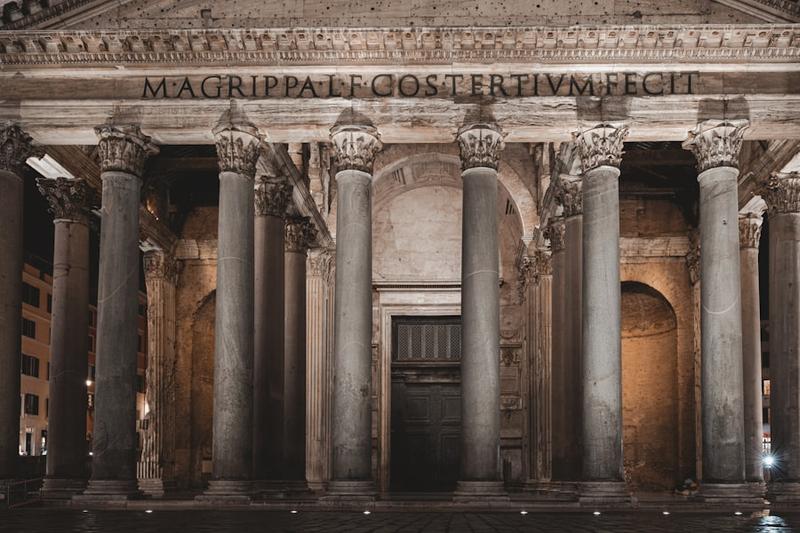
Inside St. Peter’s Basilica, Bernini’s baldachin — a bronze canopy rising twenty-nine meters over the high altar — marks the site directly above the traditional tomb of Peter. The baldachin, cast partly from bronze stripped from the Pantheon’s portico, represents one of the most ambitious works of Baroque sculpture. Beneath it, the Confessio provides a view down to the level of the ancient necropolis where the apostle’s remains are believed to rest.
Michelangelo’s Pietà, completed when the sculptor was twenty-four years old, stands in the first chapel on the right upon entering the basilica. This depiction of the Virgin Mary holding the body of Christ demonstrates a technical mastery and emotional depth that has made it one of the most recognized sculptures in the world. It is the only work Michelangelo signed, his name carved across the sash on Mary’s chest.
The Vatican Museums, encompassing over seventy thousand works displayed across seven kilometers of galleries, preserve collections assembled by popes over five centuries. The Raphael Rooms, the Gallery of Maps, and the Pinacoteca contain masterworks of Renaissance and Baroque art. The collections serve not merely as museum holdings but as expressions of the Church’s historical engagement with artistic production and cultural patronage across the centuries.
The catacombs of San Callisto and San Sebastiano, along the ancient Via Appia outside the city walls, preserve early Christian burial practices and some of the oldest surviving Christian art. Wall paintings depicting biblical scenes, the chi-rho monogram, and the fish symbol provide visual evidence of the developing iconography of the early Church. The narrow passages and stacked burial niches convey the physical reality of early Christian community life in ways that grander monuments cannot replicate.
Rome’s pilgrimage infrastructure benefits from centuries of development and refinement. The traditional Seven Pilgrim Churches of Rome — St. Peter’s, St. Paul Outside the Walls, St. John Lateran, Santa Maria Maggiore, San Lorenzo fuori le Mura, Santa Croce in Gerusalemme, and San Sebastiano — define a circuit that pilgrims have walked since at least the sixteenth century. The complete circuit covers approximately twenty kilometers and can be accomplished in a long day, though many visitors spread it across several days to allow time at each basilica.
The Vatican Museums and St. Peter’s Basilica can be visited independently or as part of organized tours. Advance booking for the museums is strongly recommended, particularly during peak seasons, as daily visitor numbers are substantial. Early morning entry typically offers the most comfortable experience. The basilica itself does not charge admission, though security screening creates queues during busy periods.
Papal Audiences take place on Wednesday mornings when the Pope is in Rome. Free tickets can be obtained through the Prefecture of the Papal Household, though many tour operators and pilgrim organizations facilitate access. The experience varies depending on the venue — outdoor audiences in St. Peter’s Square accommodate larger crowds but offer less intimate settings than the indoor audience hall.
Rome’s climate favors pilgrimage visits in spring (April–May) and autumn (September–October), when temperatures are moderate and crowds somewhat smaller than during summer. Holy Week and Easter draw the largest concentrations of pilgrims, with liturgies in St. Peter’s Square attracting tens of thousands. Christmas celebrations, including the midnight Mass celebrated by the Pope, represent another peak pilgrimage period worth planning around.
Accommodation options range from religious guesthouses and convents that welcome pilgrims to the full spectrum of commercial hotels. Several religious houses in the Borgo district near the Vatican offer lodging specifically designed for pilgrims, often at modest prices and with a communal atmosphere that facilitates shared spiritual experience. The area around Termini station provides more conventional tourist accommodations with good transit connections to the major basilicas.
- Christian Pilgrimage Traditions — The broader context of Christian sacred travel
- Via Francigena — The historic pilgrimage route from Canterbury to Rome
- Jerusalem Old City — Christianity’s other supreme pilgrimage destination
- Helena and the True Cross — The empress whose journey shaped Christian pilgrimage geography
This article is part of our guide to Rome and the Vatican: The Eternal Pilgrimage City. Our Rome planning guide covers Vatican tickets and logistics, and our 4-day itinerary maps the seven pilgrimage churches into a practical sequence.
More on Christian Pilgrimage
- Lourdes — Place
- St. Olav’s Way — Route
- Egeria: The First Pilgrim Writer — Story
- The Legend of Saint James — Story
- Margery Kempe: The Medieval Pilgrim — Story
- History of Christian Pilgrimage — Context