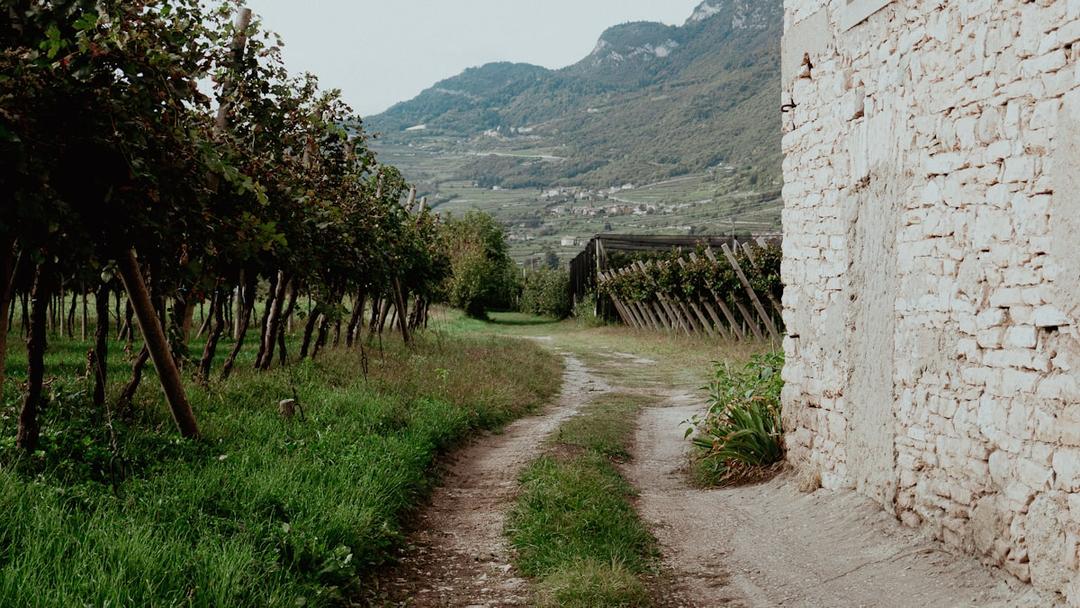
Photo by Max Böhme on Unsplash
Via Francigena
The medieval pilgrimage route from Canterbury to Rome, crossing England, France, Switzerland, and Italy over nearly 2,000 kilometers.
Countries
England, France, Switzerland, Italy
Distance
1900 km
Duration
90 days
Difficulty
moderate
The Via Francigena — literally “the road that comes from France” — emerged as a major European pilgrimage route during the early medieval period, connecting Canterbury in southeastern England with Rome through a corridor of ecclesiastical hospitality, trade, and diplomacy. The route’s documentation owes much to Sigeric the Serious, Archbishop of Canterbury, who in 990 CE recorded the seventy-nine stages of his return journey from Rome after receiving his pallium from Pope John XV. Sigeric’s itinerary, preserved in a manuscript at the British Library, provides the earliest detailed description of the route and remains the basis for the modern waymarked path.
The Via Francigena served purposes beyond pilgrimage. It functioned as a diplomatic highway connecting the papacy with the kingdoms of northern Europe, a commercial corridor for the movement of goods between the Mediterranean and the English Channel, and a military route used by armies from Charlemagne’s era through the Italian Wars. This multiplicity of functions sustained the infrastructure of bridges, hospices, and way stations that made pilgrimage feasible for ordinary travelers who could not carry sufficient supplies for weeks of walking.
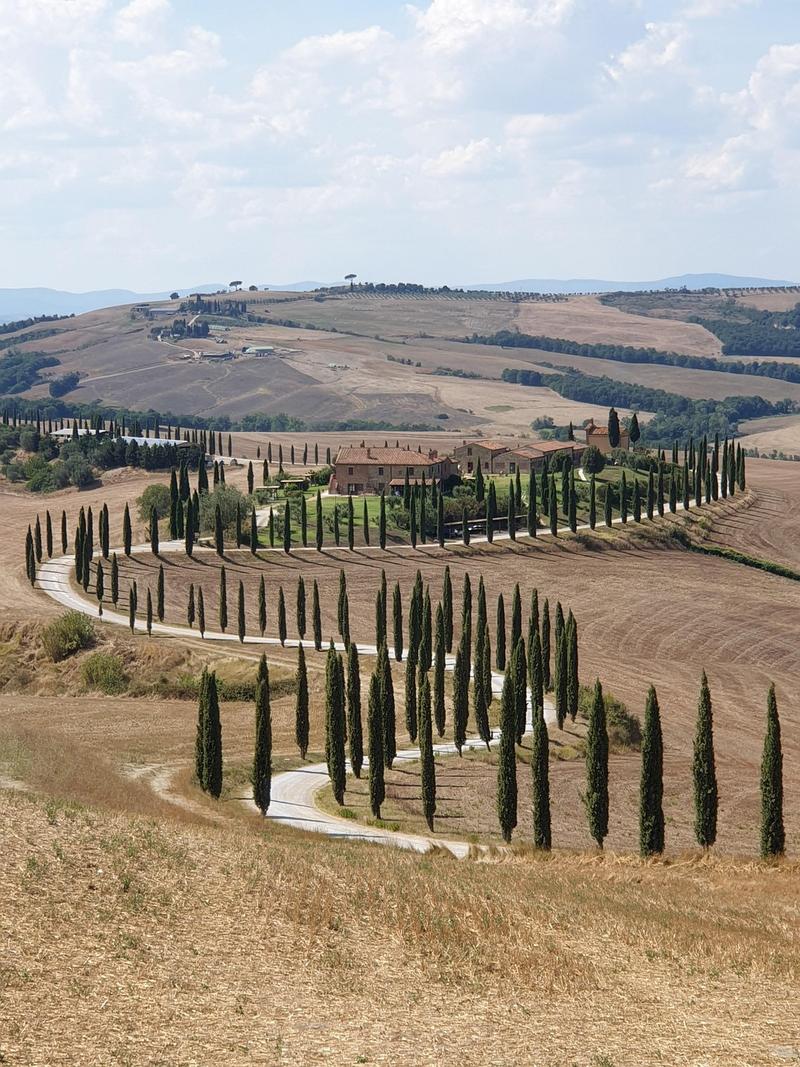
The route crosses four countries and passes through dramatically varied s: the chalk downlands of Kent, the plains of northern France, the vineyard-covered hills of Champagne and Burgundy, the Alpine passes of the Great St. Bernard, the rice paddies of the Po Valley, and the rolling hills of Tuscany and Lazio. Each section presented distinct challenges and developed its own infrastructure of accommodation and assistance for travelers.
The hospice tradition along the Via Francigena represents one of medieval Europe’s most significant charitable institutions. The Hospice of the Great St. Bernard, founded in the eleventh century at the Alpine pass bearing its name, provided shelter to travelers crossing one of the route’s most dangerous sections. Similar institutions operated at regular intervals, their endowments sustained by donations from pilgrims, nobles, and monarchs who recognized both the spiritual merit and the practical necessity of maintaining the pilgrimage infrastructure.
The route’s decline began in the sixteenth century as the Reformation reduced pilgrimage from Protestant regions, and as political conflicts along the route made travel increasingly dangerous. By the nineteenth century, the Via Francigena had largely faded from popular consciousness, surviving only in fragments of local memory and in the physical traces of its medieval infrastructure — churches, bridges, and hospice buildings that continued to serve their communities long after their pilgrim-related functions had ceased.
The journey begins at Canterbury Cathedral, where the murder of Archbishop Thomas Becket in 1170 created a pilgrimage destination that drew visitors from across Europe. Pilgrims traditionally departed from the cathedral’s western portal, walking southeast through Kent to the English Channel. The crossing to Calais marks the first of the route’s major transitions, as the pilgrim leaves the island of England for the continental road system that would carry them to Rome.
The French section, comprising roughly a third of the total distance, passes through the cathedral cities of Laon and Reims before reaching the Champagne region. The medieval champagne fairs, which drew merchants from across Europe, ensured that this section of the route maintained superior infrastructure. Pilgrims shared the road with traders, and the distinction between commercial and sacred travel was often blurred — many travelers combined pilgrimage with business.
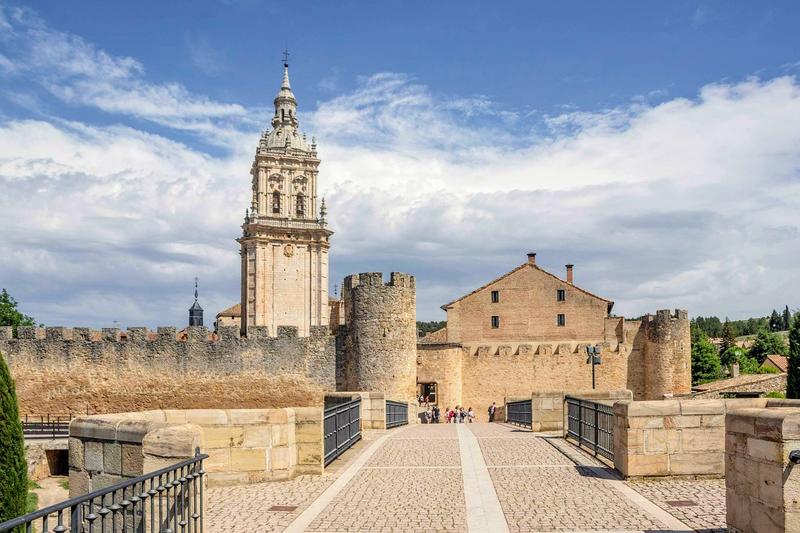
A sunlit path through the Tuscan countryside lined with cypress trees
The crossing of the Alps via the Great St. Bernard Pass, at 2,469 meters, represents the route’s physical and psychological climax. The pass is typically accessible from June through October, and medieval pilgrims who arrived outside this window faced the choice of waiting or attempting the crossing in potentially lethal conditions. The hospice at the summit, with its famous rescue dogs, became legendary for the assistance it provided to travelers in distress. The descent into the Aosta Valley brings the pilgrim into Italy, where the shifts to Mediterranean vegetation and the cultural atmosphere becomes recognizably Italian.
The Italian section follows the ancient Via Cassia for much of its length, passing through Tuscany’s hill towns — Lucca, San Gimignano, Siena — before descending into the rolling s of Lazio. This final stretch, rich in both natural beauty and historical association, builds anticipation for the approach to Rome. Medieval pilgrims would have caught their first glimpse of St. Peter’s dome (or its predecessor) from the hills north of the city, a moment that marked the culmination of months of walking.
The entry into Rome traditionally occurred through the Porta del Popolo, from which pilgrims could proceed directly to St. Peter’s Basilica. The emotional impact of arrival, after weeks or months of walking, remains a central element of the Via Francigena experience. Modern pilgrims frequently describe the final approach as a period of heightened awareness, when the accumulated physical and psychological effects of sustained walking culminate in an arrival that carries weight proportional to the effort invested.
Canterbury Cathedral serves as the route’s starting point and spiritual departure. The cathedral, a UNESCO World Heritage Site, preserves the site of Becket’s martyrdom and houses the shrine that made Canterbury one of medieval Europe’s foremost pilgrimage destinations. The connection between Canterbury and Rome through the Via Francigena links two of Christianity’s most historically significant sites.
Reims Cathedral, where French kings were traditionally crowned, stands along the French section. Its Gothic architecture, including a west front adorned with over 2,300 sculptures, represents one of the supreme achievements of medieval building. The cathedral’s stained glass windows, including those by Marc Chagall, span the full history of the building’s use as a site of worship and ceremony.
Great St. Bernard Pass and its associated hospice constitute the route’s alpine crossing. The hospice, still operated by Augustinian canons, continues to offer hospitality to travelers. The pass itself, with its stark beauty and thin atmosphere, has served as a crossing point between northern and southern Europe since before the Roman era.
Lucca, enclosed within its Renaissance walls, preserves the Volto Santo — a wooden crucifix tradition holds was carved by Nicodemus, a witness to the Crucifixion. The relic drew pilgrims along the Via Francigena for centuries, and the Cathedral of San Martino, which houses it, remains a significant stop on the modern route.
Siena, with its shell-shaped Piazza del Campo and its Gothic cathedral, provided medieval pilgrims with one of the route’s most impressive urban s. The city’s hospital, Santa Maria della Scala, operated as one of Europe’s oldest hospitals, providing care to pilgrims and the sick from the ninth century onward. Its frescoes depicting scenes of hospital life offer vivid documentation of medieval charitable practice.
Rome and the Vatican represent the journey’s destination and reward. The tradition of visiting the seven pilgrim churches of Rome gave arriving Via Francigena pilgrims a structured program for their time in the city, extending the experience of pilgrimage beyond the moment of arrival at St. Peter’s.
The revival of the Via Francigena as a walking route began in the late twentieth century, inspired partly by the success of the Camino de Santiago’s modern renaissance. In 1994, the Council of Europe designated the Via Francigena as a Cultural Route, providing institutional support for its development. The European Association of the Via Francigena (AEVF), based in Fidenza, Italy, coordinates waymarking, accommodation standards, and promotional activities across the four countries through which the route passes.
The modern route is waymarked with the red and white signage standard to European long-distance paths, supplemented by the Via Francigena’s distinctive pilgrim symbol. Accommodation options include traditional hospitality provided by religious houses and parish churches, a growing network of dedicated pilgrim hostels, and commercial lodging. The density and quality of accommodation vary significantly along the route, with the Italian section generally offering the most developed infrastructure.
The credential system, similar to that of the Camino de Santiago, allows pilgrims to collect stamps at churches, hostels, and municipal offices along the route. Upon arriving in Rome, pilgrims who have walked at least the final 100 kilometers (or cycled the final 200) can obtain the Testimonium, a certificate issued by the Vatican confirming completion of the pilgrimage. This documentation system provides both a practical record of the journey and a tangible memento of accomplishment.
Annual pilgrim numbers on the Via Francigena remain considerably smaller than those on the Camino de Santiago, which creates a different atmosphere on the trail. Pilgrims are more likely to walk in solitude, encounters with other walkers carry greater significance, and the infrastructure retains a more improvised, less commercial character. For many pilgrims, this relative obscurity is part of the route’s appeal — it offers a more demanding, less curated experience than the well-established Camino.
The route’s passage through four countries and multiple linguistic regions adds a dimension of cultural immersion absent from single-country pilgrimage routes. The Via Francigena pilgrim experiences not only changes in but shifts in language, cuisine, architecture, and social custom, making the journey a sustained encounter with European diversity.
- Rome and the Vatican — The Via Francigena’s destination and spiritual goal
- Christian Pilgrimage Traditions — The broader tradition of Christian sacred travel
- Camino de Santiago — Europe’s other great medieval pilgrimage route
- Helena and the True Cross — Early Christian pilgrimage that shaped the routes
- St. Olav’s Way
This article is part of our guide to Rome and the Vatican: The Eternal Pilgrimage City. Our Rome planning guide covers what awaits at journey’s end.
More on Christian Pilgrimage
- Jerusalem Old City — Place
- Lourdes — Place
- Egeria: The First Pilgrim Writer — Story
- The Legend of Saint James — Story
- Margery Kempe: The Medieval Pilgrim — Story
- History of Christian Pilgrimage — Context