Planning Your Rome Pilgrimage
A practical guide to pilgrimage in Rome — Vatican access, the seven churches circuit, papal audiences, dress codes, and tips for every visitor.
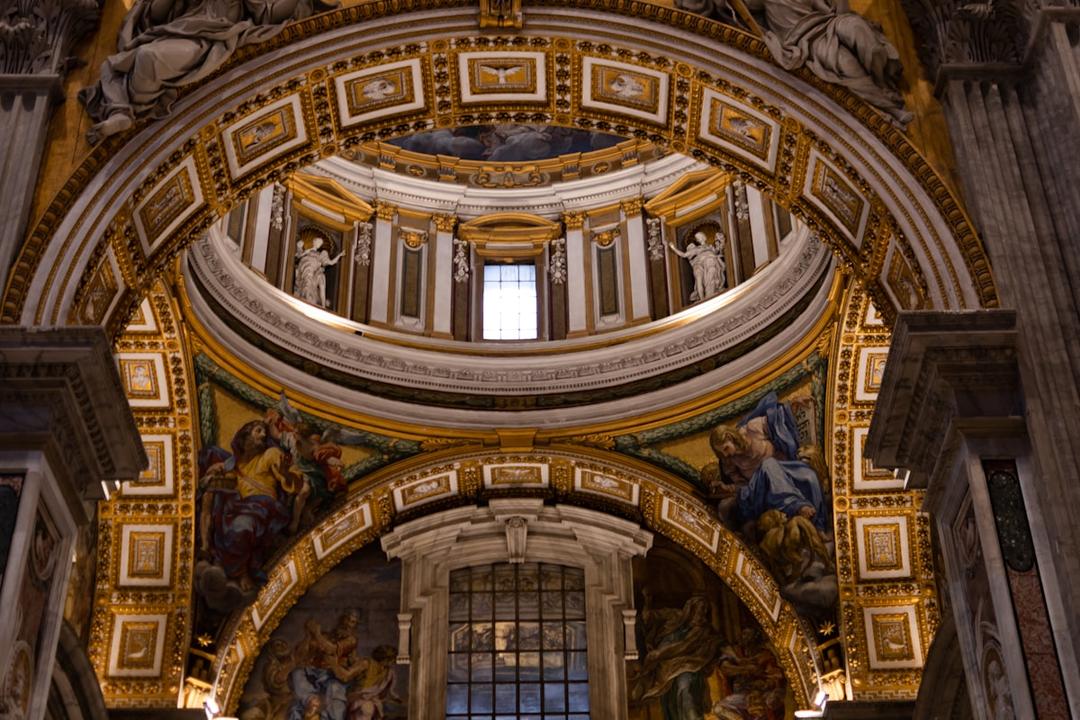
Rome layers two thousand years of Christian sacred geography onto a modern European capital of three million people. The logistical challenge is not complexity of access rules — as in Jerusalem — but sheer scale. The seven traditional pilgrimage churches are spread across a city that sprawls over 1,285 square kilometers. The Vatican Museums contain 54 galleries. St. Peter’s Basilica alone could swallow most cathedrals whole. Without a plan, pilgrims lose days to queues, wrong turns, and the exhaustion of trying to see everything at once.
This guide covers the practical decisions that shape your experience — when to arrive, how to skip the worst lines, what the dress code actually requires, and how to structure your days so the pilgrimage feels sacred rather than like an endurance test.
When to Go
Late autumn (October through November) and early spring (March through April) offer the best balance of tolerable weather and manageable crowds. Roman summers are brutal — temperatures above 35°C, relentless sun, and tourist volumes that turn Vatican queues into two-hour ordeals. If summer is unavoidable, start your days at dawn and retreat to air-conditioned churches during the midday heat.
Winter (December through February) brings cooler weather and significantly smaller crowds. January is the quietest month at the Vatican. The trade-off is shorter daylight hours and occasional rain, though Roman winters are mild by northern European standards.
Holy Week and Easter draw enormous crowds. The papal liturgies are magnificent but access is tightly controlled. If Easter is your goal, book accommodation six months ahead and accept that spontaneous access to the Vatican will be nearly impossible. Christmas brings a similar surge, with midnight mass at St. Peter’s and the papal blessing on Christmas Day drawing tens of thousands.
Jubilee years — declared by the pope roughly every 25 years — multiply pilgrimage traffic dramatically. The most recent was 2025. During jubilee periods, Rome’s infrastructure strains visibly. Hotels fill months in advance, restaurant waits lengthen, and every sacred site operates at capacity. The spiritual rewards are real but so is the logistical cost.
Vatican Access and Queues
The Vatican is the single site that breaks most Rome pilgrimage plans. Understanding how to navigate it saves hours.
St. Peter’s Basilica is free to enter and opens at 7am. The security line is shortest in the first hour. By 9am, the queue often stretches across the piazza and waits exceed 45 minutes. Late afternoon (after 3pm) is the second-best window. The basilica closes at 6pm October through March, 7pm April through September. There is no booking system — it is first-come, first-served through the security checkpoint.
The Vatican Museums and Sistine Chapel require a timed-entry ticket purchased online at the Vatican’s official website. Book at least two weeks ahead; same-day tickets are rarely available, and the unofficial ticket sellers outside the walls charge steep markups. Standard entry costs around €17. The museums open at 8am Monday through Saturday and close at 6pm (last entry 4pm). They are closed Sundays except the last Sunday of each month, when entry is free but crowds are extreme. The walk through the museums to the Sistine Chapel takes 90-120 minutes at a moderate pace. The Sistine Chapel itself is standing-room-only and guards enforce a no-photography, no-talking rule that is intermittently obeyed.
The Vatican Scavi (necropolis beneath St. Peter’s) requires a separate reservation made directly through the Vatican Excavations Office by email. This is the closest you can get to St. Peter’s traditional burial site. Tours are limited to small groups and book out weeks in advance. Apply as early as possible — this is the hardest ticket in Rome to secure.
Papal Audiences are held on Wednesdays at 9am in St. Peter’s Square (or the Paul VI Audience Hall in summer and bad weather). They are free but require tickets, available through the Prefecture of the Papal Household or through your diocese or parish. Apply at least a month ahead. Arrive by 7:30am to get a reasonable seat. The pope appears, delivers a short address in multiple languages, and offers a blessing. The experience is moving regardless of your denomination. Non-Catholics are welcome.
The Seven Pilgrimage Churches
The traditional Roman pilgrimage visits seven basilicas, a circuit established by Saint Philip Neri in the sixteenth century. The full walk covers roughly 20 kilometers. Most modern pilgrims spread this across two or three days rather than attempting it in one.
The seven churches are St. Peter’s Basilica, St. Paul Outside the Walls, St. John Lateran (the pope’s cathedral and the oldest church in Rome), Santa Maria Maggiore, San Lorenzo fuori le Mura, Santa Croce in Gerusalemme, and San Sebastiano fuori le Mura. The first four are major basilicas, well-connected by public transport. The last three are more remote and less visited, which means they are also quieter, more contemplative, and often more rewarding.
A practical approach: Day 1 covers the Vatican area (St. Peter’s plus museums). Day 2 walks the eastern circuit (St. John Lateran, Santa Croce, San Lorenzo). Day 3 covers the southern churches (St. Paul Outside the Walls, San Sebastiano) plus Santa Maria Maggiore. This grouping minimizes backtracking and allows time inside each church rather than rushing between them.
Each basilica has distinct opening hours. Most open at 7am and close between 6pm and 7pm, with a possible midday closure from 12:30pm to 3pm at the smaller churches. Confirm hours the day before, especially for San Lorenzo and San Sebastiano, which keep less predictable schedules.
Dress Codes
Rome’s dress code enforcement is concentrated at the Vatican and the major basilicas. The rule is simple: shoulders and knees must be covered. This applies to everyone regardless of gender. Sleeveless tops, shorts above the knee, and miniskirts will get you turned away at St. Peter’s security checkpoint with no exceptions and no storage for offending garments.
Enforcement at the other six pilgrimage churches varies. St. John Lateran and Santa Maria Maggiore check consistently. The smaller basilicas are less strict but respectful dress is always appropriate.
A lightweight long-sleeved shirt and trousers or a knee-length skirt work everywhere in Rome’s sacred spaces. Carry a scarf that can cover bare shoulders if your outfit is borderline. This is the same approach that works in Jerusalem’s Old City — one versatile layer solves most problems.
The catacombs have no formal dress code but are cool (14°C year-round) and require comfortable walking shoes for uneven stone floors. A light jacket is useful even in summer.
Getting Around
Rome’s public transport system is imperfect but functional. The Metro has three lines; Line A connects the Vatican area (Ottaviano stop) to the Spanish Steps and beyond. Line B reaches the Colosseum and St. Paul Outside the Walls. A single ticket (BIT) costs €1.50 and is valid for 100 minutes on buses and trams, or one Metro ride.
The Roma Pass (€32 for 48 hours or €52 for 72 hours) covers unlimited public transport and includes entry to one or two museums. For pilgrims focused on churches rather than museums, the transport-only ticket may be more cost-effective.
Walking is the best way to experience the sacred city, and the historic center is compact enough that most pilgrimage sites are within a 30-minute walk of each other. The one exception is St. Paul Outside the Walls, which sits south of the center and is best reached by Metro Line B to the Basilica San Paolo stop.
Taxis are metered and reliable. The fixed fare from Fiumicino Airport to central Rome is €50. From Ciampino Airport, the fixed rate is €31. Uber operates in Rome but is more expensive than traditional taxis for most routes.
Budget Planning
Rome is moderately expensive by Western European standards, though pilgrimage itself is remarkably affordable. Almost every church is free to enter. The Vatican Museums are the major paid exception.
Budget pilgrims can manage on €80-120 per day. Religious guesthouses and convents offer clean, simple rooms for €40-70 per night, often in spectacular locations near the Vatican or historic center. Pizza al taglio (by the slice) costs €2-4. A plate of pasta at a neighborhood trattoria runs €10-14. Water fountains — the famous nasoni — are scattered throughout the city and provide free, excellent drinking water. Fill your bottle constantly.
Mid-range travelers should budget €150-250 per day. Three-star hotels near the Vatican or Trastevere cost €100-160 per night. A sit-down lunch with wine runs €20-35. Guided tours of the Vatican cost €40-80 per person depending on group size and access level.
Tipping in Rome is not obligatory but appreciated. A euro or two left on the table at a restaurant is sufficient. Tour guides appreciate €5-10 per person.
Connecting to the Wider Pilgrimage
Rome sits at the center of a European pilgrimage network that has drawn travelers for nearly two millennia. The Via Francigena — the medieval route from Canterbury to Rome — is experiencing a revival among long-distance walkers. Pilgrims arriving on foot enter the city through the Porta del Popolo, just as their medieval predecessors did.
For pilgrims planning a broader European journey, Rome connects naturally to Santiago de Compostela via the Camino network, and to the Marian apparition sites at Lourdes, Fatima, and Medjugorje. Many Catholic pilgrims combine Rome with one or more of these destinations to create a multi-week circuit that covers the major shrines of Western Christianity.
Day trips from Rome extend the pilgrimage further. Assisi, the home of Saint Francis, is 90 minutes by train. Orvieto’s cathedral contains one of Italy’s most important eucharistic miracles. The catacombs along the Via Appia Antica extend the early Christian story that begins inside the city walls. These sites add context to the history of Christian pilgrimage that the seven basilicas introduce.
Rome is not a destination you exhaust. It is a city that reveals itself in layers — a crypt beneath a church beneath a basilica beneath the sky. The practical preparation in this guide frees you to receive those layers on their own terms, without the friction of missed queues and wrong turns interfering with the encounter that brought you here.
Experiences and Tours
Private Tour - City Center — From $138 · ★ 5.0 (163 reviews)
Private Walking Tour of the Squares and Fountains in Rome — From $229 · ★ 5.0 (130 reviews)
The Very Best Tour of Rome — From $842 · ★ 5.0 (95 reviews)
Private Tour: Ancient Rome by Car — From $466 · ★ 5.0 (146 reviews)