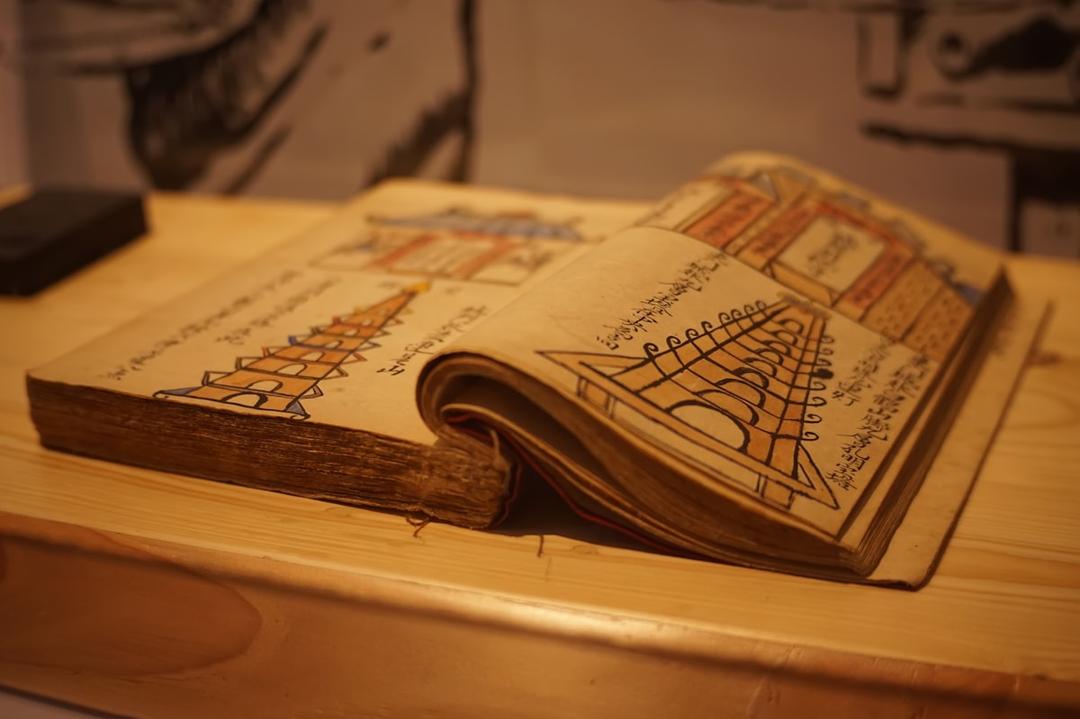
Photo by Mourizal Zativa on Unsplash
Egeria: The First Pilgrim Writer
historical figure
Time period: 4th century CE
A fourth-century woman whose detailed letters from the Holy Land provide the earliest surviving first-person account of Christian pilgrimage.
Associated traditions: Christianity
Sometime around 381–384 CE, a woman known to us as Egeria — her name is uncertain and appears in various forms in the manuscript tradition — undertook a pilgrimage from the western reaches of the Roman Empire to the Holy Land. Her account of this journey, written as a series of letters to a community of women at home (probably a religious sisterhood in Galicia or southern France), survives in a single incomplete manuscript discovered in 1884 in the Italian city of Arezzo. This fragmentary text constitutes the earliest surviving first-person narrative of Christian pilgrimage, and its detail and vividness make it one of the most valuable documents in the history of early Christian worship.
Egeria was almost certainly a woman of considerable means and social standing, though her exact identity remains debated. The ease with which she traveled, the deference shown to her by bishops and monks, and the protection afforded by Roman military escorts all suggest either aristocratic birth or institutional backing of significant weight. She traveled not as a solitary wanderer but as a figure who could command resources — guides, animals, military accompaniment through dangerous territory — and whose arrival at major churches and monasteries warranted personal attention from their leaders.
Her journey covered an extraordinary geographical range. The surviving text describes visits to Mount Sinai, where she climbed to the summit guided by monks who pointed out the locations associated with Moses and the Exodus narrative. She traveled to Mesopotamia to visit the tomb of the apostle Thomas at Edessa (modern Şanlıurfa) and the reputed site of Abraham’s home at Harran. She explored the sites associated with the patriarch Job in the Hauran region of modern Syria. Throughout these travels, she sought out the specific places mentioned in scripture, asking local informants to identify the exact locations of biblical events and describing the terrain, vegetation, and distances with a precision that has allowed modern scholars to trace her routes.
The most valuable portion of Egeria’s account describes the liturgical practices of the Jerusalem church during her extended stay in the city. She documents the daily offices — the prayers conducted at the Church of the Holy Sepulchre at the third, sixth, and ninth hours, and the all-night vigils on Sundays. She provides the first detailed description of Holy Week observances in Jerusalem, recording processions that moved from site to site around the city, each stop marked by scripture readings appropriate to the events that tradition placed at that location. Her account reveals a liturgy that was intensely geographical — the worship of the Jerusalem church was structured around movement through sacred space, not merely the performance of rituals within a single building.
Egeria’s writing style combines practical observation with devotional enthusiasm. She describes the physical challenges of climbing Mount Sinai — “these mountains are ascended with infinite toil, for you cannot go up gently by a spiral track, as we say snail-shell wise, but you climb straight up the whole way, as if up a wall” — alongside theological reflections on the significance of standing where Moses stood. Her letters convey a personality that is curious, energetic, intellectually engaged, and deeply pious, producing a portrait of a pilgrim that feels remarkably accessible across sixteen centuries.
Egeria’s pilgrimage took place during a formative period for Christian sacred geography. Helena’s visit to Palestine approximately fifty years earlier had initiated the construction of major basilicas at the Crucifixion and Nativity sites, and the process of identifying and architecturally enshrining other biblical locations was still actively underway. Egeria arrived in a being transformed from Roman provincial territory into the Holy Land — a process she witnessed and documented from the perspective of a pilgrim for whom these identifications were both exciting discoveries and confirmations of scriptural truth.
The liturgical practices Egeria describes illuminate a Christianity still in the process of developing the worship forms that would become standard across the centuries. The stational liturgy of Jerusalem — in which the congregation processed from site to site, reading at each location the biblical passage associated with that place — represents an approach to worship that used geography as a liturgical text. The pilgrim did not merely hear about the Crucifixion; she stood at the place where it occurred and heard the relevant Gospel passage read aloud in the hearing of the assembled faithful. This integration of space, text, and community created an intensity of devotional experience that pilgrims sought to replicate in their home churches, influencing the development of liturgy throughout the Christian world.
Egeria’s gender and the apparent audience of her letters — a community of women — place her account within the history of women’s participation in early Christian pilgrimage and religious life. Her travels were neither unique nor unprecedented; other women of means, including the Roman aristocrat Paula (documented by Jerome), undertook comparable journeys during the same period. The surviving accounts suggest that the fourth and fifth centuries represented a period of relatively expansive opportunity for women’s participation in pilgrimage and religious leadership, a space that would narrow considerably in later centuries.
The manuscript’s discovery in 1884 by the Italian scholar Gian Francesco Gamurrini represented a major event in the study of early Christianity. Previously, our knowledge of fourth-century pilgrimage and Jerusalem liturgy had depended on fragments and indirect references. Egeria’s account provided a continuous, detailed narrative that transformed scholarly understanding of how early Christians related to sacred space, organized worship, and experienced the of the Bible as a physical reality.
Egeria’s account established a literary genre — the pilgrim narrative — that would flourish throughout the medieval period and beyond. Her approach of documenting sacred sites, describing the journey’s physical challenges, noting liturgical practices, and reflecting on the spiritual significance of geographical encounter created a template that subsequent pilgrim writers, from the anonymous Bordeaux Pilgrim to the Crusade chroniclers to modern travel memoirists, would follow and adapt.
The liturgical data preserved in Egeria’s letters has proven indispensable for scholars studying the development of Christian worship. Her descriptions of Holy Week in Jerusalem reveal practices — including the Palm Sunday procession, the veneration of the cross on Good Friday, and the Easter vigil — that spread from Jerusalem to churches throughout the Christian world and survive, in recognizable form, in contemporary liturgical practice. The Jerusalem church functioned as a liturgical laboratory, and Egeria’s letters provide our best window into its experimental period.
The fact that the earliest surviving pilgrim narrative was written by a woman adds a significant dimension to our understanding of early Christian pilgrimage. Egeria’s account demonstrates that women participated in the most ambitious forms of sacred travel from the tradition’s inception, navigating the same physical challenges, intellectual questions, and devotional experiences as their male contemporaries. Her voice — confident, observant, enthusiastic — complicates any narrative that positions women as passive recipients of male-defined religious culture.
Egeria’s text continues to generate scholarly discussion, with debates ongoing about her place of origin, her social status, the exact dates of her journey, and the community to which her letters were addressed. Each of these questions bears on larger historical issues — the social mobility of late Roman women, the nature of early monastic communities, the networks of travel and communication within the late empire. Her fragmentary text, modest in its original ambitions, has become a keystone document in multiple fields of historical inquiry.
- Jerusalem Old City — The primary destination Egeria describes in detail
- Christian Pilgrimage Traditions — The tradition Egeria helped document
- Helena and the True Cross — The empress whose earlier journey created the sites Egeria visited
- Relics and Sacred Objects — The material culture Egeria encountered
- Margery Kempe: Medieval Pilgrim
This article is part of our guide to Jerusalem: The City Sacred to Three Faiths.
More on Christian Pilgrimage
- Lourdes — Place
- Rome and the Vatican — Place
- St. Olav’s Way — Route
- Via Francigena — Route
- The Legend of Saint James — Story
- History of Christian Pilgrimage — Context