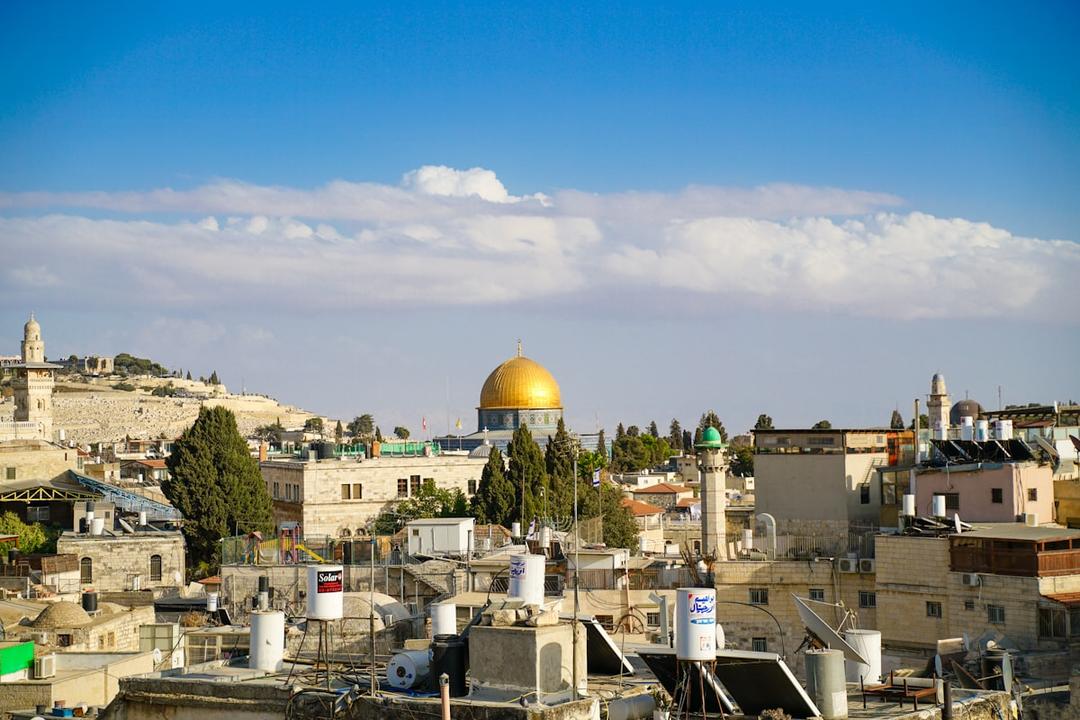
Planning Your Jerusalem Pilgrimage
Plan your Jerusalem pilgrimage — visas, dress codes, sacred site access rules, best seasons, budgets, and practical tips for every faith tradition.
Jerusalem demands more practical preparation than almost any other pilgrimage destination. The city layers three major faith traditions onto a single square kilometer of the Old City, each with its own access rules, dress codes, and schedules. A site open to all visitors on Tuesday morning may be closed to non-Muslims by Tuesday afternoon. Shabbat reshapes the entire western half of the city every Friday evening. Understanding these rhythms before you arrive transforms the experience from stressful to sacred.
This guide covers the practical questions that pilgrimage websites and tour brochures often skip — the logistics that determine whether you actually get into the sites you came to see.
When to Go
Spring (March through May) and autumn (September through November) offer the best conditions. Temperatures are comfortable for walking, the light is beautiful for photography, and the major summer crowds have thinned. The shoulder seasons also align with important religious calendars: Easter and Passover fall in spring, while Sukkot fills the Jewish Quarter with decorated booths in autumn.
Summer (June through August) brings intense heat that makes the exposed walk along the Via Dolorosa genuinely difficult. Temperatures regularly exceed 35°C. If summer is your only option, start early — most sacred sites open at dawn, and the Old City is coolest before 9am.
Winter (December through February) is cooler and less crowded but brings rain. December draws Christmas pilgrims to Bethlehem, just a short bus ride south. Jerusalem occasionally receives snow, which transforms the Dome of the Rock into a scene most pilgrims never expect.
Avoid arriving during major holidays unless you specifically want that experience. The week of Passover, Easter Holy Week, and Ramadan each bring massive crowds. Hotel prices spike, sacred sites become standing-room-only, and access restrictions tighten. If you do plan a holiday visit, book accommodation months ahead and accept that flexibility in your schedule will be limited.
Entry Requirements and Visas
As of January 2025, most Western visitors need an ETA-IL (Electronic Travel Authorization) before arriving in Israel. The application is online, costs approximately $25, and is typically approved within 48-72 hours. Apply at least a week before travel. Your passport must be valid for six months beyond your planned departure date.
Israel no longer stamps passports directly. Instead, you receive a paper entry card at border control. Keep this card — you will need it for hotel check-ins and when exiting the country. If you plan to visit neighboring countries that do not have diplomatic relations with Israel, the absence of an Israeli stamp in your passport avoids complications, though a Jordanian border stamp can still indicate an Israel visit.
Bethlehem and other Palestinian Authority areas require crossing a checkpoint but no additional visa for most nationalities. Your Israeli entry permit covers these crossings. Guided tours handle checkpoint logistics smoothly. Independent travelers should carry their passport and entry card at all times.
Dress Codes by Sacred Site
Dress code enforcement in Jerusalem is strict and varies by site. Arriving underdressed means being turned away after potentially long waits.
The Western Wall requires modest clothing for both men and women. Men must cover their heads — free paper kippot are available at the entrance. Women should cover shoulders and knees. The plaza is gender-separated: men pray at the larger left section, women at the smaller right section. On Shabbat (Friday sunset through Saturday sunset), photography and electronic devices are prohibited in the plaza.
The Temple Mount / Haram al-Sharif enforces the strictest dress code in the city. Both men and women must cover shoulders, arms to the elbows, and legs to the knees. No shorts, tank tops, or revealing clothing. Modest dress is checked at the security entrance near the Mughrabi Gate. Non-Muslim visitors cannot enter the Dome of the Rock or Al-Aqsa Mosque — you can view the exteriors and walk the plaza during designated visiting hours only (see Access Rules below). Religious items including Bibles, prayer books, and visible crosses or Stars of David are prohibited on the mount for non-Muslim visitors.
The Church of the Holy Sepulchre requires covered shoulders and knees. Enforcement is less rigid than at the Western Wall or Temple Mount, but respectful dress is expected. The church is shared among six Christian denominations under the Status Quo arrangement — an Ottoman-era agreement that governs every inch of the building. This means different sections may have different atmospheres. The Ethiopian chapel on the roof feels different from the Catholic chapel near Calvary.
For general Old City walking, lightweight clothing that covers shoulders and knees works everywhere. A scarf or shawl in your day bag solves most unexpected dress code situations.
Sacred Site Access Rules
The access schedule is the single most important thing to understand before visiting Jerusalem. Getting this wrong means missing the sites you traveled thousands of miles to see.
The Temple Mount / Haram al-Sharif is open to non-Muslim visitors through the Mughrabi Gate only, during limited hours: typically Sunday through Thursday, 7:30-11:00am and 1:30-2:30pm, though hours change frequently and without notice. The site closes to non-Muslim visitors during all Muslim prayer times, on Fridays and Saturdays, and during Islamic holidays including Ramadan. Check the current schedule at the Mughrabi Gate entrance or with your hotel the evening before you plan to visit. Arrive early — lines form well before opening and the site closes promptly.
The Western Wall is open 24 hours a day, 365 days a year. This is one of the few sacred sites in the world with truly unrestricted access. The most powerful times to visit are Friday evening (when Shabbat begins and the plaza fills with singing and prayer) and early morning on any weekday (when the plaza is quiet and contemplative).
The Church of the Holy Sepulchre opens at 5am in summer (4am in winter) and closes at 9pm (7pm in winter). The earliest hours are the best time to visit — arrive at opening and you may find yourself almost alone at the Stone of Anointing and the Edicule (the tomb structure). By mid-morning, tour groups fill the space and waits to enter the tomb can exceed an hour.
The Mount of Olives sites — including the Garden of Gethsemane, the Church of All Nations, and the Chapel of the Ascension — are generally open mornings and afternoons with a midday break. Gethsemane closes at noon and reopens at 2pm. The walk down from the Mount of Olives viewpoint to Gethsemane takes about 20 minutes and offers one of the most photographed panoramas in Jerusalem.
Shabbat and Its Impact on Your Visit
Shabbat reshapes Jerusalem from Friday afternoon through Saturday evening. Understanding its rhythms is essential for any visitor, regardless of faith.
From roughly 2pm Friday, shops and restaurants in West Jerusalem begin closing. By Friday sunset, public transportation stops entirely — no buses, no light rail. The only option is taxis (which charge a premium) or walking. This shutdown continues until approximately one hour after sunset on Saturday.
The Old City operates somewhat differently. The Muslim and Christian Quarters remain active during Shabbat, and shops along the Via Dolorosa and in the souq stay open. The Jewish Quarter shuts down completely.
For pilgrims, Shabbat creates both challenges and opportunities. The challenge is logistical — plan transportation before Friday afternoon and ensure you have food (many hotel restaurants remain open for guests). The opportunity is spiritual. Experiencing Shabbat at the Western Wall on Friday evening is one of Jerusalem’s most moving experiences. Families gather, congregations sing, and the plaza takes on an energy that no other time of week can match. Even non-Jewish visitors find it profoundly affecting.
Getting Around
The Old City is entirely walkable — about 1 kilometer across in any direction. However, the terrain is uneven cobblestone, with steep stairs in several sections. Comfortable, broken-in walking shoes are essential. Sandals and dress shoes will punish your feet within an hour.
The city’s light rail runs a single line through modern Jerusalem, connecting the Central Bus Station to the Old City’s Damascus Gate area. It is useful, inexpensive, and air-conditioned. A Rav-Kav transit card simplifies payment.
Taxis are plentiful but insist that the driver use the meter. The ride from Ben Gurion Airport to central Jerusalem takes about 50 minutes and costs approximately 250-350 ILS ($70-100). Shared sherut vans run the same route for a fraction of the cost.
For day trips to sites in the broader Holy Land — the Sea of Galilee, Nazareth, Bethlehem, the Dead Sea — organized tours or rental cars are the most practical options. Driving in Jerusalem itself is stressful and parking near the Old City is extremely limited.
Budget Planning
Jerusalem’s costs vary enormously depending on your accommodation and eating choices. A rough daily budget framework:
Budget pilgrims can manage on $80-120 per day. Hostels and pilgrim guesthouses like the Austrian Hospice or Notre Dame’s dormitory rooms run $40-70 per night. Street food in the Muslim Quarter — falafel, shawarma, fresh juice — costs $5-10 per meal. Most sacred sites are free to enter.
Mid-range travelers should plan for $150-250 per day. Three-star hotels in the Old City or East Jerusalem cost $100-150 per night. Sit-down restaurants run $15-30 per meal. A half-day guided walking tour costs $30-60 per person.
Premium pilgrims spending $300+ per day access boutique hotels like the Mamilla or American Colony, private guides ($200-400 per day), and fine dining. The experience is dramatically more comfortable but the sacred sites themselves are identical for everyone.
Tipping is customary at 10-15% in restaurants. Tour guides expect $10-20 per person for a half-day tour. Currency is the Israeli New Shekel (ILS), though US dollars are widely accepted at tourist-facing businesses.
Health and Safety
Jerusalem is generally safe for tourists. The Old City has a visible security presence and violent crime against visitors is rare. Standard urban precautions apply — watch for pickpockets in crowded market areas, keep valuables secure, and be aware of your surroundings.
The political situation can affect access to certain areas, particularly the Temple Mount. Check your government’s travel advisory before departure and register with your embassy’s travel notification program. Your hotel concierge is usually the best real-time source for current conditions.
Tap water in Jerusalem is safe to drink. The biggest health risk for pilgrims is dehydration — the climate is drier than most visitors expect. Carry a water bottle and drink regularly, especially when walking the Old City in warm months.
Pharmacies are available throughout the city, and emergency medical care meets Western standards. Carry any prescription medications in their original containers.
Connecting to the Wider Pilgrimage
Jerusalem is not an island. For Christian pilgrims, the city connects to the broader history of Christian pilgrimage and to the network of Holy Land sites that extend across Israel and the Palestinian territories. The Sea of Galilee, Nazareth, Bethlehem, and Jericho are all within day-trip range.
For Muslim visitors, Jerusalem’s Al-Aqsa compound connects to the broader geography of Islamic pilgrimage. Many combine a Jerusalem visit with Hajj or Umrah, making the third holiest site part of a wider sacred journey that includes Mecca and Medina.
For Jewish pilgrims, Jerusalem is the center — the city toward which every synagogue in the world faces. The Western Wall connects to millennia of longing and return. Other sacred cities like Varanasi share this quality of being the absolute spiritual center of a tradition, the place where the divine and human worlds feel closest.
Whatever tradition brings you to Jerusalem, the city rewards preparation. Arrive knowing the access rules, the dress codes, and the rhythms of Shabbat, and you free yourself to focus on what you actually came for — the encounter with the sacred that has drawn pilgrims here for three thousand years.
Experiences and Tours
Best seller! Jerusalem old city four quarters tour — From $450 · ★ 5.0 (148 reviews)
Magical Walking Tour in Old City of Jerusalem — From $100 · ★ 5.0 (27 reviews)
Bethlehem Half Day Private Tour - Pick up from Jerusalem/Tel Aviv/Ashdod — From $350 · ★ 5.0 (55 reviews)
Full Day Jerusalem Tour: In Jesus’ Steps — From $350 · ★ 5.0 (22 reviews)
Full Day Private Christian Tour in Jerusalem with Tour Guide — From $750 · ★ 5.0 (29 reviews)