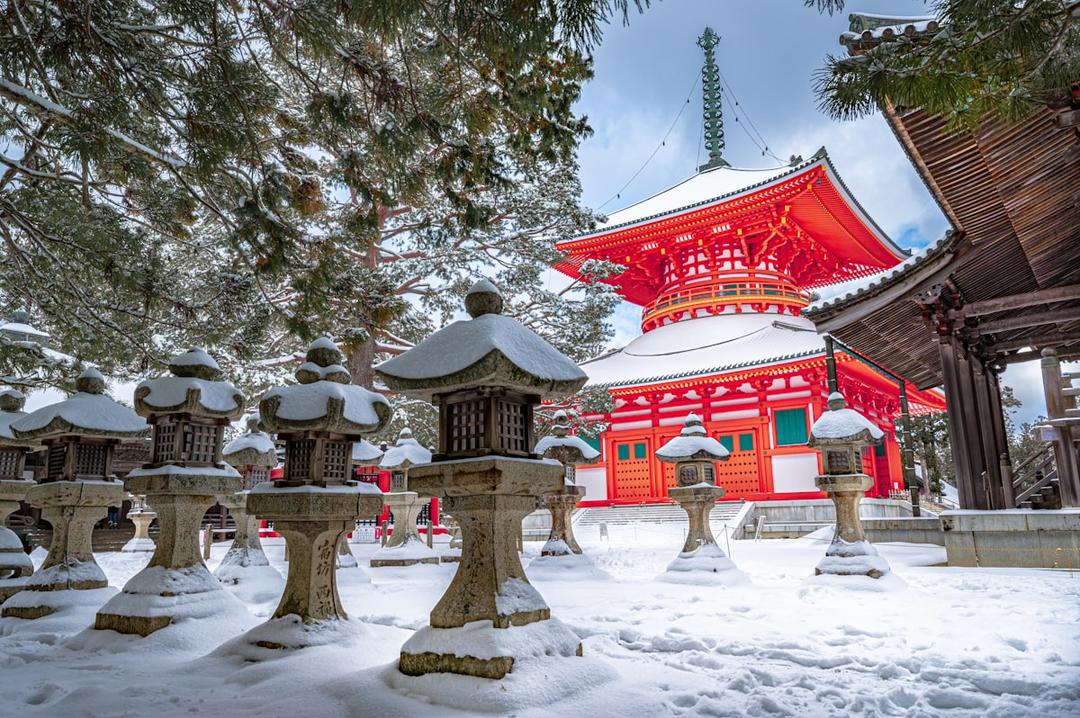
Planning Your Sacred Japan Trip
A practical guide to Japan's pilgrimage trails — Kumano Kodō, Shikoku 88, Mount Kōya temple lodging, train passes, trail logistics, and cultural etiquette.
Japan’s pilgrimage infrastructure is among the best in the world — well-marked trails, reliable public transport, temple lodging with meals included, and luggage forwarding services that let you walk with a daypack. But the logistics are distinctly Japanese, which means they work beautifully once you understand the system and can be baffling if you do not. Booking processes are unfamiliar, trail information exists primarily in Japanese, and the cultural expectations around temple stays and shrine visits follow rules that differ from anything in Western pilgrimage traditions.
This guide covers the practical knowledge that transforms a Japanese pilgrimage from overwhelming to deeply rewarding.
When to Go
Spring (late March through May) and autumn (October through November) are the ideal seasons. Cherry blossoms in spring and fiery maple leaves in autumn add visual splendor to the walking experience. Temperatures are mild — 15-25°C — and rainfall is moderate.
Summer (June through September) is challenging. The rainy season (tsuyu) runs from mid-June through mid-July, drenching the mountain trails and making stone paths dangerously slippery. August brings oppressive heat and humidity that make long-distance walking genuinely miserable. If summer is your only option, carry rain gear and start walking before dawn.
Winter (December through February) brings cold temperatures to the mountain trails but is manageable on the Kumano Kodō and in Kyoto itself. Some mountain passes close due to snow, particularly on the Kohechi route connecting the Kumano region to Mount Kōya. The Shikoku circuit is walkable year-round, though winter nights in unheated temple lodgings require warm layers. Winter has one significant advantage: almost no other foreign walkers are on the trails.
Golden Week (late April to early May) and Obon (mid-August) are Japan’s major holiday periods. Accommodation fills completely, trains are packed, and prices spike. Avoid these dates unless you book months ahead.
Getting to the Trails
Kyoto is the natural gateway. All three major pilgrimage circuits — the Kumano Kodō, the Shikoku 88 temples, and Mount Kōya — are accessible from the city.
A Japan Rail Pass is essential for most pilgrimage itineraries. The 7-day pass (approximately ¥50,000 / $330) covers all JR trains including the shinkansen. The 14-day pass (approximately ¥80,000 / $530) is better value for pilgrims combining multiple circuits. Purchase your pass online before arriving in Japan — it cannot be bought domestically. The pass covers the express train from Kyoto or Osaka to Kii-Tanabe, the gateway town for the Kumano Kodō’s Nakahechi route, a journey of about 3-4 hours with one change in Osaka.
For the Kumano Kodō specifically, local buses connect Kii-Tanabe station to the trailhead at Takijiri. These buses are not covered by the JR Pass — pay in cash with coins. Have exact change ready. The bus takes about 40 minutes.
Mount Kōya is reached by train from Osaka’s Namba station via the Nankai Railway (not covered by JR Pass — separate ticket required, about ¥1,400). The journey includes a dramatic cable car ascent to the mountaintop temple complex.
Shikoku is reached by train from Osaka or Okayama via the Seto-Ohashi Bridge. Temple 1 (Ryōzenji) is near Tokushima, accessible from Osaka in about 2.5 hours.
Accommodation: Temple Lodging and Guesthouses
Shukubō (temple lodging) on Mount Kōya is the signature accommodation experience of Japanese pilgrimage. Over fifty temples offer overnight stays that include Buddhist vegetarian dinner (shōjin ryōri), breakfast, and optional attendance at morning prayers (typically 6am). Prices range from ¥10,000-20,000 ($65-130) per person including two meals. Book through the Koyasan Shukubo Association or through the Kumano Travel booking platform. Reserve at least two weeks ahead in spring and autumn — popular temples fill quickly.
What to expect: you sleep on futons on tatami floors. Rooms may be shared or private depending on the temple and price. Bathrooms are shared. Dinner is served in your room or in a communal dining hall. The food is exquisite — multi-course kaiseki prepared without meat, fish, or pungent vegetables, following rules established over a thousand years ago.
Kumano Kodō guesthouses (minshuku and pension) along the Nakahechi route are booked through the Kumano Travel website, the only comprehensive booking platform for the trail. Accommodation is simple but comfortable — Japanese-style rooms with futons, shared bathrooms, and home-cooked meals. Prices run ¥7,000-12,000 ($45-80) per person with dinner and breakfast. Book early: the small villages along the trail have limited beds and cannot absorb overflow.
Luggage forwarding is available on the Kumano Kodō. The Tanabe City Kumano Tourism Bureau coordinates a service that transfers your main bag between guesthouses so you walk with only a daypack. This service must be arranged in advance and costs ¥2,000-3,000 per bag per transfer. It transforms the walking experience — steep mountain trails are dramatically easier without a full pack.
Shikoku henro accommodation ranges from simple temple lodging (tsūyadō — free or donation-based shelters) to ryokan and business hotels near major temples. The infrastructure is less centralized than on the Kumano Kodō. Many henro carry camping gear as backup. The Shikoku Henro Trail guide app provides GPS navigation and accommodation listings.
The Dual Pilgrim Certificate
Completing both the Kumano Kodō and the Camino de Santiago earns you the Dual Pilgrim certificate — one of only two pilgrimage routes in the world to hold UNESCO World Heritage status. To qualify on the Kumano Kodō side, you need to walk at least one designated section and get your Kumano Kodō pilgrim stamp booklet stamped at the trailhead and at Kumano Hongu Taisha. The booklet is available at the Tanabe City tourism office or at the Takijiri trailhead information center.
The minimum qualifying walk is the Hosshinmon-oji to Kumano Hongu Taisha section — about 7 kilometers, 3-4 hours, and manageable for most fitness levels. But the full Nakahechi route from Takijiri to Hongu (3-5 days) is far more rewarding. The Dual Pilgrim certificate is issued at the Tanabe tourism office or can be applied for online after completing both pilgrimages.
Trail Logistics and What to Pack
The Kumano Kodō’s Nakahechi route is well-marked with directional signs in English and Japanese. The trail surface alternates between ancient stone-paved paths, forest trails, and occasional road sections. Elevation changes are moderate — the steepest sections gain about 400 meters over 2-3 kilometers. Good hiking shoes with ankle support and reliable grip on wet stone are essential. The trails can be slippery after rain, and rain is frequent on the Kii Peninsula.
Pack light. With luggage forwarding, you need only a daypack containing rain gear, water, snacks, sun protection, a warm layer, and a change of socks. Trail snacks are limited on the route — buy onigiri (rice balls) and energy bars at convenience stores in Kii-Tanabe or Kyoto before heading south. The villages along the trail have small shops but selection is unpredictable.
Water is available at guesthouses and some trailside rest stops. Carry at least one liter, more in warm weather. Japanese tap water is safe to drink everywhere.
A pocket WiFi device or Japanese SIM card is useful for navigation and emergency communication. Cell coverage on the mountain trails is patchy but generally available in villages.
Cultural Etiquette at Temples and Shrines
Japanese sacred sites have specific behavioral expectations that differ significantly from Western churches and mosques. Learning the basics shows respect and deepens your experience.
At Shinto shrines: bow once before passing through the torii gate. At the temizu basin, rinse your left hand, then right hand, then pour water into your cupped left hand and rinse your mouth (spit discreetly, not back into the basin). At the offering hall, throw a coin (¥5 is traditional — the word for five yen, go-en, sounds like the word for connection), bow twice deeply, clap twice, make your prayer, then bow once more.
At Buddhist temples: the ritual is simpler. Bow at the entrance. Light incense if offered (waft the smoke toward yourself — it is believed to have healing properties). Place your palms together and bow before the main image. At Mount Kōya’s Okunoin cemetery, maintain silence and do not photograph the memorial stones.
Shoes: remove them before entering any indoor temple space. Carry socks — bare feet on cold temple floors are uncomfortable and considered slightly impolite.
Photography: generally permitted in shrine and temple grounds but often prohibited inside main halls and at specific sacred objects. Look for signs. When in doubt, ask. Never photograph at Okunoin’s inner sanctuary on Mount Kōya. On the Kumano Kodō, trail photography is unrestricted.
Connecting to the Wider Pilgrimage
Japan’s sacred geography connects to a broader Buddhist pilgrimage tradition that spans Asia. The four sacred sites of Buddhism in India — Bodh Gaya, Lumbini, Sarnath, and Kushinagar — predate Japanese Buddhism by over a millennium. Varanasi, adjacent to Sarnath where the Buddha gave his first sermon, connects the Japanese pilgrimage experience to its Indian philosophical roots.
The psychology of pilgrimage — the way sustained walking changes consciousness — finds perhaps its purest expression in Japanese trail pilgrimage. The meditative rhythms of the Kumano Kodō and Shikoku circuits are not side effects of the journey but its purpose. Understanding this before you walk shifts your relationship to the physical demands. The steep sections, the rain, the fatigue — these are not obstacles to the pilgrimage. They are the pilgrimage.
Kyoto itself is the starting point and the spiritual context for everything that radiates outward into the mountains. A few days exploring the city’s thousand-plus temples before heading to the trails provides essential background. The aesthetics of a Zen rock garden, the ritual precision of a tea ceremony, the stillness of a bamboo grove — these are the cultural frequencies that Japanese pilgrimage operates on. Arriving at the Kumano Kodō trailhead without first experiencing Kyoto is like reading the middle chapters of a book.
Experiences and Tours
Kyoto: Fushimi Inari Shrine Walking Tour — From $39 · ★ 5.0 (63 reviews)
Kiyomizu Temple and Backstreets of Gion, Half Day Group Tour — From $59 · ★ 5.0 (51 reviews)
Kyoto: Zen Garden, Zen Mind (Private) — From $380 · ★ 5.0 (126 reviews)
Kyoto Hiking Tour: The Nature and Legends of Kurama and Kibune — From $190 · ★ 5.0 (77 reviews)
Private Tea Ceremony and Sake Tasting in Kyoto Samurai House — From $131 · ★ 5.0 (163 reviews)