Why Walking to Sacred Places Changes People
cultural overview
The anthropology and psychology behind pilgrimage — liminality, communitas, and why the physical act of walking matters.
Related traditions: Christianity, Islam, Buddhism, Hinduism
Regions covered: Global
People return from pilgrimages saying they feel different. The claim is so consistent, across such different traditions and historical periods, that it invites explanation. Why should walking a long distance to a specific place produce psychological change? The answer involves a convergence of factors — physical exertion, disruption of routine, social encounter, and the structure of narrative — that together create conditions for transformation that ordinary travel rarely achieves.
The Body on the Road
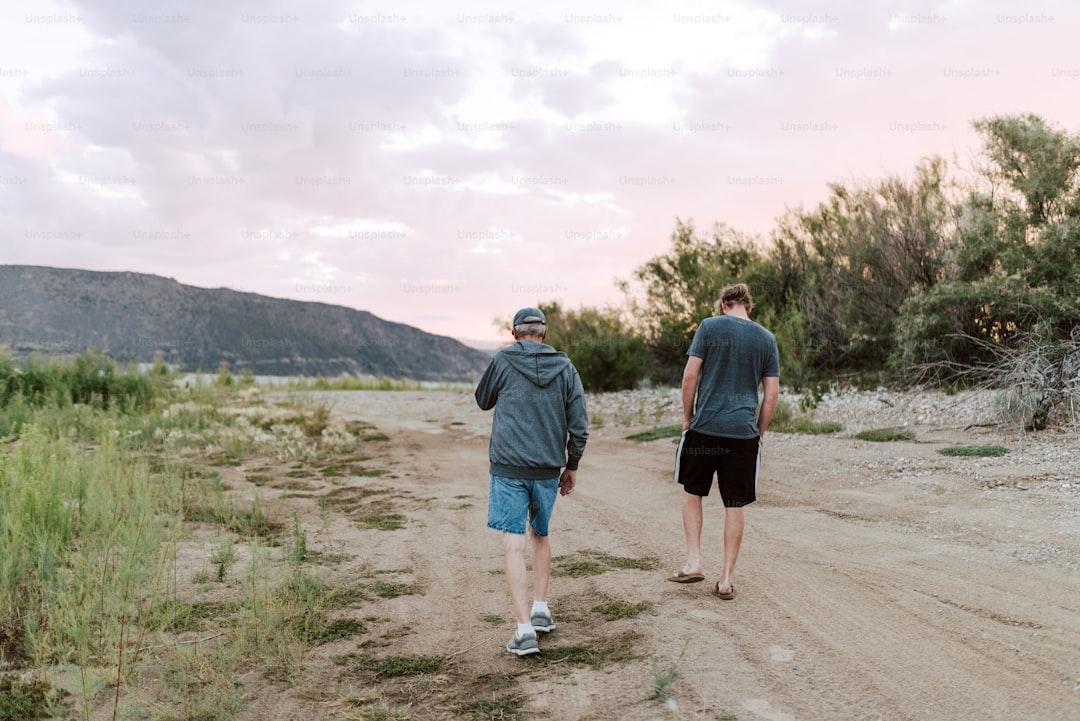
The most obvious feature of pilgrimage is also the most underexamined: the walking itself. A pilgrim on the Camino de Santiago covers roughly 800 kilometers over four to six weeks. A Hindu devotee circling the Narmada River walks more than 2,600 kilometers. Even shorter pilgrimages — the Hajj’s ritual circuit, the kora around a Tibetan stupa — involve sustained physical effort that engages the body in ways that sitting in a car or airplane does not.
Neuroscience and exercise psychology offer partial explanations. Sustained rhythmic walking stimulates the release of endorphins and endocannabinoids, producing the “runner’s high” effect. Bilateral movement — the alternating left-right pattern of walking — activates both brain hemispheres and has been associated with improved emotional processing. Time spent outdoors, in natural environments, reduces cortisol levels and activates the parasympathetic nervous system, shifting the body from stress response to recovery.
But pilgrims have described these effects for millennia without access to neurochemical explanations, and the language they use points beyond biology. The experience of walking day after day, with blistered feet and an aching back, is often described as a stripping away — a reduction to essentials. When the body’s demands become insistent enough, the mental chatter that fills ordinary life quiets. Pilgrims frequently report that a shift occurs around the third or fourth day of walking, when the rhythm of movement becomes automatic and attention opens to the surrounding , to fellow travelers, and to interior states that were previously inaccessible.
Liminality and the In-Between State
The anthropologist Victor Turner drew on Arnold van Gennep’s earlier work on rites of passage to describe pilgrimage as a liminal experience — a passage through an in-between state that is neither the pilgrim’s ordinary life nor their final destination. In liminal space, the normal rules that structure daily existence are suspended. Social hierarchies dissolve. The pilgrim is no longer defined by their job, their wealth, or their social role, but by the simple fact that they are on the road.
This liminality is not merely theoretical. Pilgrims commonly describe a sense of freedom and openness that begins when they leave home and intensifies as they move further from their usual context. The medieval practice of making a will before setting out on pilgrimage was not mere prudence — it was an acknowledgment that the pilgrim was entering a state of social death and rebirth. The Muslim pilgrim’s entry into ihram accomplishes something similar through ritual means: the donning of two simple white cloths strips away the visual markers of identity and declares the pilgrim’s entry into sacred time.
Turner’s related concept of communitas — the intense, spontaneous fellowship that arises among people sharing a liminal experience — is one of the most consistently reported aspects of pilgrimage. Strangers walking the same path, enduring the same heat, sharing meals at the same refuges, develop bonds that participants describe as deeper and more immediate than ordinary friendship. The sociologist Émile Durkheim’s concept of “collective effervescence” — the heightened emotional state produced by shared ritual activity — applies as well, particularly to mass pilgrimages like the Hajj, Kumbh Mela, or the Arba’een walk to Karbala.
Narrative and Meaning-Making
Pilgrimage provides something that ordinary travel rarely offers: a narrative structure. The pilgrim is not merely a tourist visiting interesting places but a character in a story with a beginning (departure), a middle (the road), and an end (arrival at the sacred site). This narrative arc aligns with the structure that psychologists have identified as central to human meaning-making. Jerome Bruner argued that humans understand their experience primarily through narrative — we make sense of what happens to us by fitting it into stories. Pilgrimage provides a ready-made story that the pilgrim inhabits bodily.
The narrative dimension explains why pilgrimage often produces retrospective transformation — meaning that becomes visible only after the journey is complete. While walking, many pilgrims report boredom, pain, doubt, and frustration. The experience is not reliably ecstatic. But in the retelling, the difficult days become part of a coherent story of challenge and growth. The blisters become evidence of commitment. The day of terrible rain becomes the day something broke open. The narrative reshapes the raw experience into something meaningful, and this reshaping is itself part of pilgrimage’s psychological work.
The Return
The most neglected phase of pilgrimage is the return. Van Gennep’s model of rites of passage — separation, liminality, reincorporation — gives equal weight to the final stage, but pilgrimage scholarship has tended to focus on the journey and the destination. Yet pilgrims consistently describe the return home as disorienting and difficult. The world they left has not changed, but they have, and the gap between their transformed interior and their unchanged exterior life can produce a sense of dislocation.
This difficulty may itself be part of the process. The psychologist Robert Kegan’s model of transformative learning suggests that genuine psychological development occurs not in moments of comfort but in moments of productive disequilibrium — when existing frameworks for understanding the world prove inadequate and must be reconstructed. The returned pilgrim, unable to slip seamlessly back into old patterns, is in precisely this condition. The integration of the pilgrimage experience into everyday life may take months or years, and for some people the process never fully completes — they set out again.
Liminality — From the Latin limen (threshold), a term describing the in-between state experienced during rites of passage. In pilgrimage, liminality refers to the pilgrim’s experience of being neither in their ordinary life nor at their destination — a condition of openness and vulnerability that can facilitate transformation.
Communitas — The spontaneous, egalitarian fellowship that arises among people sharing a liminal experience. Distinguished from ordinary community by its intensity and its disregard for social hierarchies, communitas is one of the most consistently reported psychological experiences of pilgrimage.
Collective Effervescence — Émile Durkheim’s term for the heightened emotional and spiritual energy generated when large groups engage in shared ritual activity. Mass pilgrimages like the Hajj and Kumbh Mela are among the most powerful examples of this phenomenon.
Bilateral Stimulation — The neurological effect of sustained rhythmic movement that engages both sides of the body. Walking activates alternating brain hemispheres and has been associated with improved emotional processing — a mechanism also used therapeutically in EMDR (Eye Movement Desensitization and Reprocessing).
Victor Turner and Edith Turner, Image and Pilgrimage in Christian Culture (1978), introduced liminality and communitas to pilgrimage studies. Arnold van Gennep’s The Rites of Passage (1909) provides the foundational model of separation, liminality, and reincorporation. Jerome Bruner’s Acts of Meaning (1990) develops the argument for narrative as the primary mode of human sense-making. Robert Kegan’s In Over Our Heads (1994) describes the role of productive disequilibrium in adult development. Recent empirical research on the psychological effects of pilgrimage includes studies published in the Journal of Religion and Health and the International Journal of Religious Tourism and Pilgrimage.