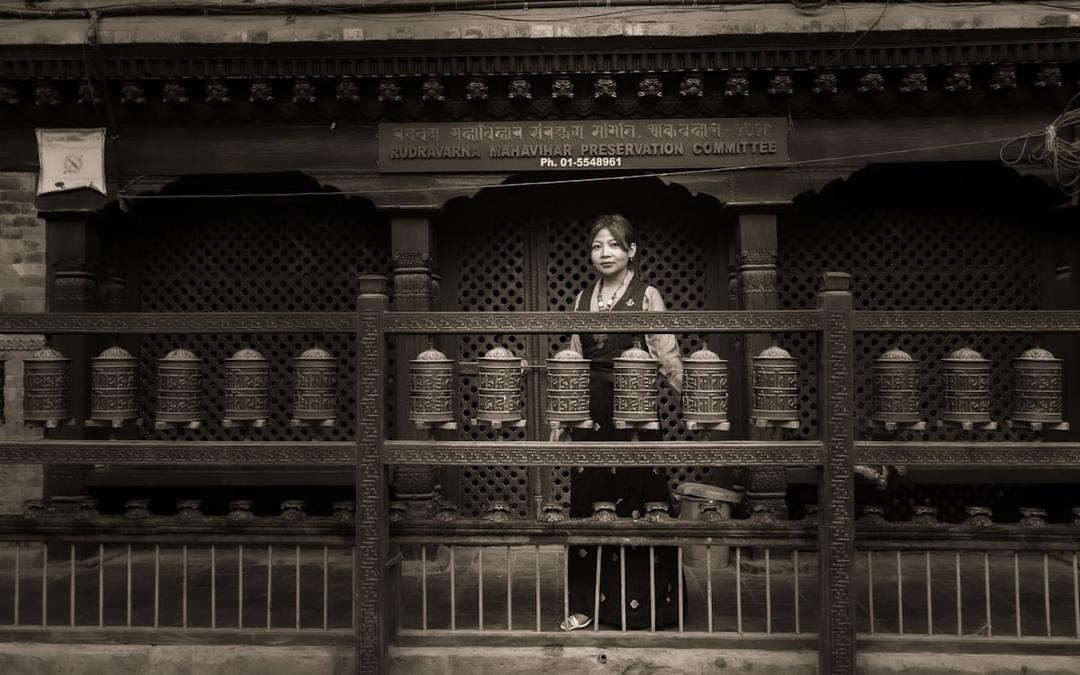
Photo by Sushanta Rokka on Unsplash
The Four Sacred Sites of Buddhism
religious context
Understanding the four places associated with the Buddha's life that form the foundational geography of Buddhist pilgrimage.
Related traditions: Buddhism
Regions covered: South Asia
The Buddha’s Instruction
According to the Mahaparinibbana Sutta, one of the earliest and most important texts in the Pali Canon, the Buddha himself established the framework for Buddhist pilgrimage shortly before his death. When his attendant Ananda expressed distress at the approaching parinirvana (final passing), the Buddha identified four places that the faithful should visit with “reverence and awe”: Lumbini, where he was born; Bodh Gaya, where he attained enlightenment; Sarnath, where he delivered his first sermon; and Kushinagar, where he passed into final nirvana. The Buddha stated that anyone who died on pilgrimage to these sites with a devoted heart would be reborn in a heavenly domain — a promise that provided canonical authorization for the practice of sacred travel within a tradition that might otherwise have regarded geographical attachment as a form of clinging.
This canonical foundation distinguishes Buddhist pilgrimage from that of many other traditions. The four sites are not merely places where important events happened to occur — they are destinations explicitly recommended by the tradition’s founder as worthy of devotional visit. The Buddha’s instruction created a geography of sacred space that has organized Buddhist pilgrimage for over two millennia, providing a stable framework around which practices of varying elaboration have developed across different Buddhist cultures and historical periods.
Lumbini: The Place of Birth
Lumbini, in the Terai plains of what is now southern Nepal near the Indian border, is identified as the birthplace of Siddhartha Gautama, the historical Buddha, traditionally dated to 563 BCE (though scholarship proposes various alternative dates). According to the traditional narrative, Queen Maya Devi gave birth while traveling to her parents’ home, stopping in a garden where she grasped a branch of a sal tree and delivered the future Buddha from her right side. The infant reportedly took seven steps and declared that this would be his final birth.
The site’s identification was confirmed by the discovery in 1896 of the Ashoka Pillar, erected by the Mauryan Emperor Ashoka during his pilgrimage to Lumbini in approximately 249 BCE. The pillar’s inscription records Ashoka’s visit and his exemption of Lumbini village from certain taxes in honor of the Buddha’s birth there. This inscription provides one of the most important pieces of archaeological evidence for the historical geography of the Buddha’s life and demonstrates that organized pilgrimage to the four sites was already well established within three centuries of the Buddha’s death.
The Maya Devi Temple at the center of the modern Lumbini complex preserves the Marker Stone, believed to indicate the exact birthplace. Excavations beneath the temple in 2013 revealed a timber structure dating to approximately the sixth century BCE, potentially contemporary with the Buddha himself — a discovery that generated significant scholarly attention. The surrounding sacred garden, with its ancient pool where Maya Devi is said to have bathed, has been developed into the Lumbini Development Zone, a master-planned sacred designed by the Japanese architect Kenzo Tange.
Bodh Gaya: The Place of Enlightenment
Bodh Gaya, in the Indian state of Bihar, marks the site where Siddhartha Gautama attained enlightenment (bodhi) beneath a pipal tree, becoming the Buddha — the “Awakened One.” The event, traditionally dated to the full moon of the month of Vesakha (April–May), represents the central moment in Buddhist history: the point at which a human being achieved complete understanding of the nature of suffering, its causes, and the path to its cessation. The Mahabodhi Temple, a UNESCO World Heritage Site, stands at the spot where this transformation occurred.
The Bodhi Tree at Bodh Gaya — a descendant of the original tree, which has been replanted multiple times following natural death and deliberate destruction — serves as the site’s most potent symbol. Pilgrims sit beneath it in meditation, attempting to connect with the experience of the Buddha’s awakening through proximity to its location. The Vajrasana (Diamond Throne), a stone platform beneath the tree said to mark the exact seat of the Buddha’s meditation, is regarded as the most sacred spot in the Buddhist world.
Bodh Gaya has become an international Buddhist center, with monasteries and temples built by Buddhist communities from Thailand, Myanmar, Sri Lanka, Japan, China, Tibet, Bhutan, and other countries. Each national temple reflects its own architectural and devotional traditions, creating a remarkable assemblage of Buddhist cultural diversity concentrated in a single small town. During Vesakha celebrations and during the winter months when Tibetan Buddhist communities gather for teachings, Bodh Gaya becomes a microcosm of the entire Buddhist world.
Sarnath: The Place of the First Sermon
Sarnath, located approximately ten kilometers northeast of Varanasi in northern India, marks the site where the Buddha delivered his first discourse after attaining enlightenment. This sermon, known as the Dhammacakkappavattana Sutta (“Setting in Motion the Wheel of the Dharma”), was addressed to five former ascetic companions and articulated the Four Noble Truths and the Eightfold Path — the foundational teachings of Buddhism. The event is described as “setting in motion the wheel of the Dharma” because it initiated the transmission of the Buddha’s understanding to others, creating the possibility of a community of practitioners.
The Dhamek Stupa at Sarnath, a solid cylindrical structure approximately 43 meters high and dating in its present form to the fifth century CE, marks the traditional site of the First Sermon. Archaeological excavations have revealed that the stupa was built over earlier structures dating to the Mauryan period, indicating continuous veneration of the site from at least the third century BCE. The nearby Mulagandhakuti Vihara marks the site where the Buddha reportedly spent his first rainy season retreat.
Emperor Ashoka’s patronage left significant marks at Sarnath, including the Lion Capital — four lions seated back-to-back on an abacus decorated with a wheel (dharmachakra) — which has been adopted as the national emblem of modern India. The wheel from the capital appears on the Indian flag, creating a direct visual link between the Buddhist heritage of Sarnath and the identity of the contemporary Indian state.
Kushinagar: The Place of Final Passing
Kushinagar, in the Gorakhpur district of Uttar Pradesh, is identified as the site of the Buddha’s parinirvana — his death and entry into final nirvana at approximately eighty years of age. The event, traditionally dated to 483 BCE, occurred in a grove of sal trees where the Buddha, suffering from food poisoning, lay down between two trees and delivered his final instructions to his assembled followers. His last words, according to the Pali Canon, were: “All conditioned things are impermanent. Work out your salvation with diligence.”
The Mahaparinirvana Temple at Kushinagar houses a reclining Buddha statue approximately six meters in length, depicting the Buddha in his final posture. The statue, dating to the fifth century CE, has been the object of continuous veneration for over fifteen hundred years. The Ramabhar Stupa, a short distance from the temple, marks the traditional site of the Buddha’s cremation, and archaeological investigation has confirmed the presence of ancient structural remains beneath the current stupa.
Kushinagar, the least developed of the four sacred sites, retains a quality of quiet that pilgrims often find appropriate to its association with the Buddha’s passing. The sal trees that surround the temple echo the grove described in the Pali texts, and the site’s relative remoteness — it lies far from major cities and transportation hubs — creates an atmosphere of withdrawal that mirrors the Buddha’s final journey away from the centers of his teaching activity.
The Sites as a Pilgrimage Circuit
The four sites, while individually significant, gain additional meaning when understood as a circuit that traces the arc of the Buddha’s life from birth through awakening, teaching, and death. Walking this circuit — which covers several hundred kilometers across the Gangetic plain of northern India and the Terai of Nepal — replicates in physical movement the temporal progression of the Buddha’s biography. The pilgrim who visits all four sites has, in a sense, accompanied the Buddha through the entirety of his earthly life, a form of devotional companionship that echoes the relationship between the Buddha and his original disciples.
Parinirvana — The Buddha’s final passing and complete release from the cycle of rebirth. Distinguished from ordinary death by the understanding that the Buddha, having attained complete enlightenment, would not be reborn in any form.
Bodhi — Enlightenment or awakening; the direct, complete understanding of the nature of reality that the Buddha achieved at Bodh Gaya. The term gives Bodh Gaya its name and the Bodhi Tree its significance.
Dharmachakra — The Wheel of the Dharma, set in motion by the Buddha’s first sermon at Sarnath. The wheel symbolizes the teaching as a force that, once set in motion, continues to roll forward through history.
Stupa — A dome-shaped reliquary mound that serves as a focus for Buddhist devotion. The original stupas housed relics of the Buddha distributed after his cremation; later stupas were built to mark sacred sites and to house the relics of other revered figures.
Caitya — A sacred spot or object of veneration, particularly a site associated with the Buddha’s life. The four sacred sites are the preeminent caityas of the Buddhist tradition.
The Mahaparinibbana Sutta (Digha Nikaya 16) provides the canonical foundation for the four-site pilgrimage. Ashoka’s pillar inscriptions at Lumbini and other sites provide archaeological corroboration. The Chinese pilgrims Faxian (fifth century) and Xuanzang (seventh century) documented the sites extensively, and their accounts remain primary sources for understanding the sites’ historical condition. Modern archaeological work, particularly by Alexander Cunningham in the nineteenth century and subsequent Indian and international teams, has confirmed and elaborated the textual evidence.
- Bodh Gaya — The site of the Buddha’s enlightenment
- Lumbini — The Buddha’s birthplace in modern Nepal
- Buddhist Pilgrimage Paths — The broader tradition of Buddhist sacred travel
- Xuanzang: The Buddhist Pilgrim — The monk who documented these sites in the seventh century