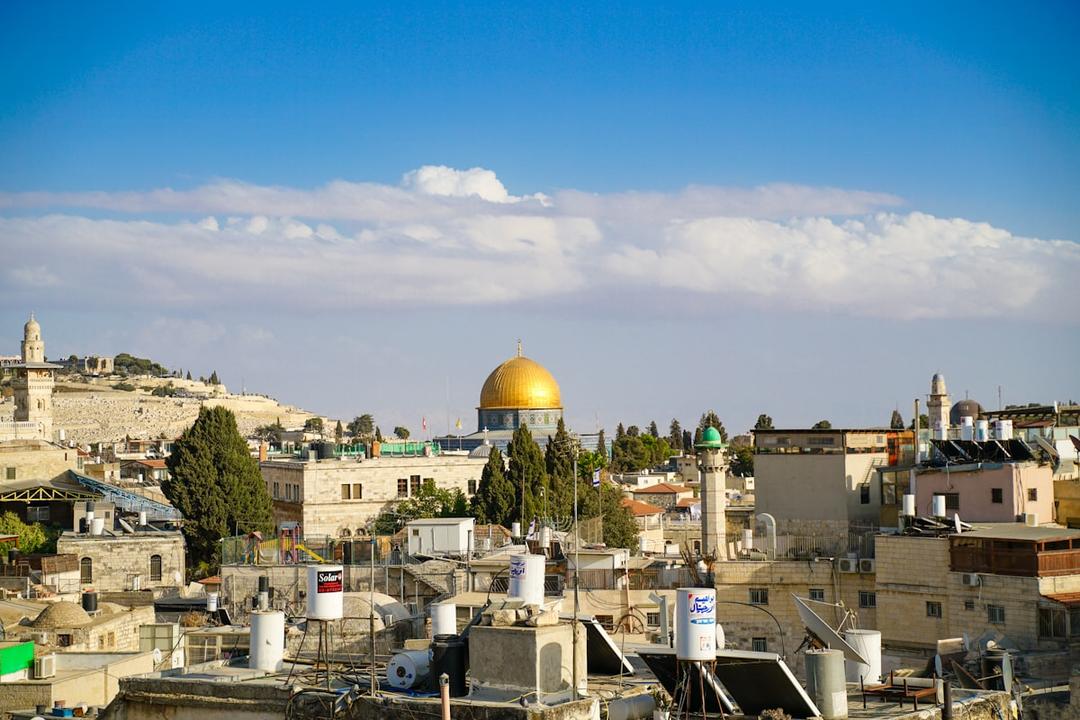
3 Days in Jerusalem: A Multi-Faith Pilgrimage Itinerary
A day-by-day Jerusalem itinerary covering the Jewish Quarter, Christian holy sites, the Temple Mount, Mount of Olives, and a Bethlehem day trip.
Three days gives you enough time to encounter Jerusalem’s three major faith traditions on their own terms — not rushing through holy sites as a tourist but spending enough time in each quarter and at each sacred place to let the spiritual weight of the city register. This itinerary organizes the Old City’s complex access schedules into a logical sequence that minimizes backtracking and maximizes time inside the sites rather than waiting in queues.
Read our planning guide first for visa requirements, dress codes, and Shabbat logistics. This itinerary assumes you arrive on a Sunday or Monday to avoid Shabbat closures during your first two days.
Day 1: The Jewish Quarter and the Western Wall
Morning (7:00am – 12:00pm)
Start early at the Western Wall before tour groups arrive. Enter the Old City through the Jaffa Gate and walk south through the Armenian Quarter to the Jewish Quarter. The Western Wall plaza opens at sunrise and is quietest between 7:00 and 9:00am. Spend at least 30 minutes here — approach the wall, touch the ancient stones, observe the morning prayers. Men enter the left section, women the right. Free paper kippot are available for men at the entrance.
After the Wall, walk through the Western Wall Tunnels — the underground passage along the full length of the Temple Mount’s western foundation. This requires a pre-booked ticket (reserve online at least a week ahead). The 75-minute guided tour reveals Herodian-era stonework that is invisible from the surface. The tunnel tour typically runs at 7:30am, 9:00am, and later intervals.
Emerge and explore the Jewish Quarter on foot. The Cardo — a reconstructed Roman-era shopping street — runs north-south through the quarter. The Burnt House museum preserves a first-century Jewish home destroyed during the Roman siege of 70 CE. The Hurva Synagogue, rebuilt in 2010 after multiple destructions, offers rooftop views across the Old City.
Afternoon (1:00pm – 5:00pm)
Lunch in the Jewish Quarter — Tiferet Yisrael Street and the area near the Cardo have several options. After lunch, walk south to the City of David archaeological site, just outside the Old City walls near the Dung Gate. The two highlights are Hezekiah’s Tunnel — a 533-meter water channel carved in 701 BCE that you wade through in knee-deep water (bring water shoes and a flashlight, though the route is lit) — and the Pool of Siloam, recently expanded to reveal much more of the original pool where Jesus healed the blind man according to the Gospel of John.
Allow 2-3 hours for the City of David, including the wet tunnel route. A dry alternative tunnel exists for those who prefer not to wade.
Evening (6:00pm – 8:00pm)
Return to the Western Wall for the transition into evening. If your visit falls on a Friday, experience the beginning of Shabbat — families gather, congregations sing, and the plaza fills with an energy that is one of Jerusalem’s most moving experiences. On other evenings, the wall is quieter and deeply contemplative as the stones catch the last light.
Dinner in the Jewish Quarter or at one of the restaurants along Jaffa Gate. Lina Restaurant in the Christian Quarter serves excellent hummus if you want to preview tomorrow’s territory.
Day 2: The Christian Quarter and the Mount of Olives
Morning (5:00am – 11:00am)
This is the earliest and most important start. Walk to the Church of the Holy Sepulchre for its 5:00am opening (4:00am in winter). In the first hour, you may have the Stone of Anointing and the Edicule — the structure enclosing Christ’s traditional tomb — nearly to yourself. By 8:00am, tour groups fill the space and the wait to enter the Edicule can exceed an hour.
Inside the church, the key stations are: the Stone of Anointing (where Jesus’s body was prepared for burial according to tradition), the Chapel of Calvary/Golgotha (climb the steep stairs to the right of the entrance — both a Catholic and Greek Orthodox altar mark the traditional site of the crucifixion), and the Edicule itself. The Ethiopian chapel on the roof and the Chapel of Saint Helena in the lower level are less visited and reward quiet attention.
After the Holy Sepulchre, walk the Via Dolorosa — the traditional route of Jesus carrying the cross. The 14 Stations of the Cross wind through the Muslim and Christian Quarters. Start at Station 1 near the Lions’ Gate (the Antonia Fortress site) and walk westward. Stations 10 through 14 are inside the Church of the Holy Sepulchre. A guided walk provides the historical context that makes each station meaningful rather than just a numbered plaque on a wall.
Midday (11:00am – 1:00pm)
Exit the Old City through the Lions’ Gate and take a taxi or walk (20 minutes uphill) to the Mount of Olives viewpoint. The panorama from here — the entire Old City spread below with the Dome of the Rock gleaming at its center — is the most photographed view in Jerusalem and one of the most iconic in the world.
Afternoon (1:00pm – 5:00pm)
Walk downhill from the viewpoint through the Jewish cemetery (the world’s oldest continuously used cemetery) to the Garden of Gethsemane and the Church of All Nations. The ancient olive trees in the garden may date to the time of Christ — carbon dating has placed some at nearly 2,000 years old. The church interior is deliberately dark, designed to evoke the night of Jesus’s arrest.
Continue downhill to the Tomb of the Virgin Mary (Kidron Valley) and the Church of Mary Magdalene — a striking Russian Orthodox church with golden onion domes visible from across the valley.
If energy permits, visit the Chapel of the Ascension at the top of the Mount of Olives, where Christian tradition places Jesus’s ascent into heaven. The small circular building is now a mosque but permits non-Muslim visitors for a small fee.
Evening
Dinner in the Christian Quarter or East Jerusalem. The Austrian Hospice rooftop café offers sunset views over the Old City.
Day 3: The Temple Mount, Muslim Quarter, and Bethlehem
Morning (7:00am – 11:30am)
The Temple Mount / Haram al-Sharif is today’s priority and its access window is narrow. Non-Muslim visitors enter only through the Mughrabi Gate, typically Sunday through Thursday, 7:30-11:00am (confirm the current schedule the evening before — hours change without notice). Arrive at the Mughrabi Gate by 7:00am. The security line moves slowly and the site closes promptly.
Once on the platform, you cannot enter the Dome of the Rock or Al-Aqsa Mosque — non-Muslim access is restricted to the plaza. But the plaza itself is extraordinary: 35 acres of open space above the Old City, the golden Dome shimmering in the morning light, the Al-Aqsa Mosque to the south, and the sense of standing on one of the most contested and sacred pieces of ground on earth. Religious items (Bibles, prayer books, visible religious symbols) are prohibited for non-Muslim visitors.
After the Temple Mount, descend into the Muslim Quarter — the largest and most vibrant of the four quarters. The souq (market) along Al-Wad Road and Via Dolorosa is the most atmospheric market in the Old City. Stop for coffee, browse the spice shops, and observe the daily life of a quarter that has been continuously inhabited since the Mamluk period.
Afternoon (12:30pm – 5:00pm)
Take a taxi or bus to Bethlehem (30 minutes). The journey crosses a checkpoint — carry your passport. Guided tours handle the logistics seamlessly and add historical context.
In Bethlehem, the Church of the Nativity marks the traditional site of Jesus’s birth. The church dates to the fourth century — commissioned by Constantine and Helena — making it one of the oldest continuously operating churches in the world. Descend to the Grotto of the Nativity, where a silver star on the floor marks the traditional birthplace. The queue to touch the star varies from 15 minutes to over an hour depending on the day.
Adjacent to the church, the Milk Grotto and the Shepherd’s Field in nearby Beit Sahour add another hour to the visit. The Shepherd’s Field, where angels announced Christ’s birth according to Luke’s Gospel, includes both Catholic and Greek Orthodox chapels set among ancient caves.
Evening
Return to Jerusalem for your final evening. Consider a last visit to the Western Wall after dark — the plaza is beautifully lit and far less crowded than during the day. Or walk the ramparts of the Old City walls (accessible near the Jaffa Gate) for a farewell perspective on the city you have spent three days exploring.
Practical Notes
This itinerary works best starting on a Sunday, Monday, or Tuesday. Starting on Wednesday means Day 3’s Temple Mount visit falls on a Friday, when non-Muslim access is closed. Starting on Thursday pushes Day 2 into Shabbat, when the Jewish Quarter shuts down.
Comfortable walking shoes are essential — you will cover 8-12 kilometers per day on uneven cobblestone. Carry water, sunscreen, a head covering, and a scarf or shawl for dress code compliance at sacred sites.
The Old City is roughly one square kilometer. Everything on Days 1 and 2 is walkable. Day 3’s Bethlehem trip requires transport — a taxi costs approximately 200-250 ILS roundtrip, or join a guided tour for about $50-80 per person.
For more on access rules, Shabbat schedules, dress codes, and budget planning, see our comprehensive Jerusalem planning guide and Old City walking guide. For the broader theological context of what you encounter at each site, explore the Christian pilgrimage traditions and Islamic pilgrimage traditions hub pages.
Experiences and Tours
Best seller! Jerusalem old city four quarters tour — From $450 · ★ 5.0 (148 reviews)
Magical Walking Tour in Old City of Jerusalem — From $100 · ★ 5.0 (27 reviews)
Bethlehem Half Day Private Tour - Pick up from Jerusalem/Tel Aviv/Ashdod — From $350 · ★ 5.0 (55 reviews)
Full Day Jerusalem Tour: In Jesus’ Steps — From $350 · ★ 5.0 (22 reviews)
Full Day Private Christian Tour in Jerusalem with Tour Guide — From $750 · ★ 5.0 (29 reviews)