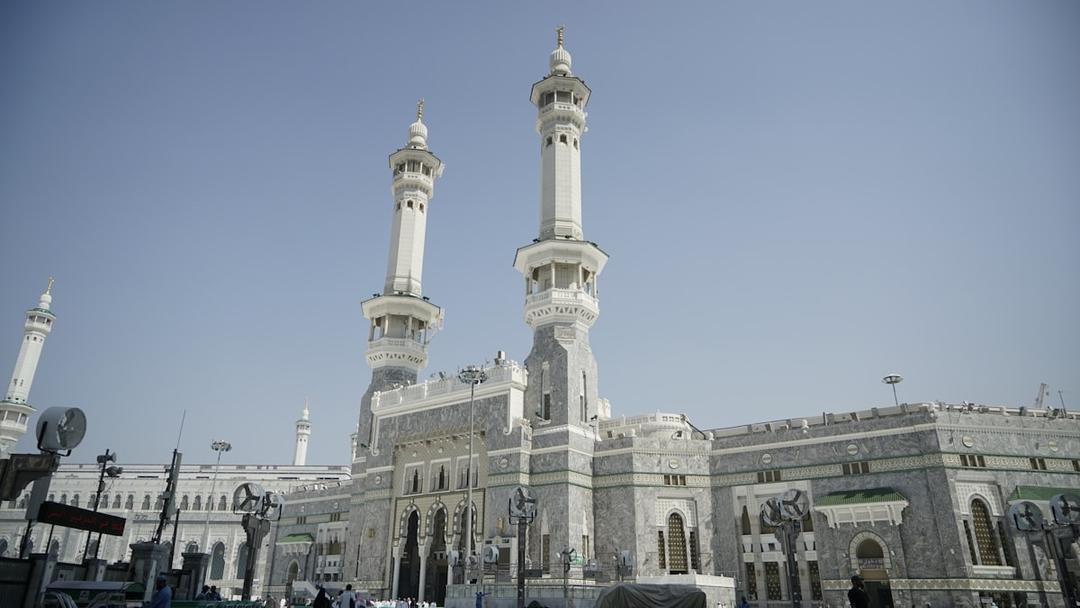
Walking the Hajj: A Step-by-Step Ritual Guide
A practical guide to Hajj's walking rituals — tawaf, sa'i, Arafat, Muzdalifah, and the Jamarat, with distances, timing, and physical preparation.
The Hajj is the most physically demanding pilgrimage in the world. Over five days, pilgrims walk 50-80 kilometers across sites spread over 20 kilometers of Saudi Arabia’s Hejaz region, performing rituals that reenact the experiences of the Prophet Ibrahim, Hajar, and the Prophet Muhammad. The walking happens in extreme heat, dense crowds, and a state of spiritual intensity that makes the physical demands feel both harder and more bearable than expected.
This guide covers the walking dimensions of each Hajj ritual — distances, terrain, crowd dynamics, and physical strategies. For the ritual sequence, visa logistics, and health preparation, see our Hajj planning guide and complete day-by-day itinerary.
Tawaf: Circling the Kaaba
Distance: approximately 3.5 kilometers (7 circuits). Duration: 45 minutes to 2+ hours depending on crowd level and floor. Terrain: polished marble and stone — flat, smooth, climate-controlled indoors.
Tawaf — seven counterclockwise circuits of the Kaaba — is performed multiple times during Hajj and Umrah. Each circuit begins and ends at the Black Stone (al-Hajar al-Aswad), set in the Kaaba’s eastern corner. In centuries past, pilgrims kissed the stone on each circuit. Today, with two million pilgrims, most point toward it from a distance and recite “Bismillah, Allahu Akbar.”
The ground floor (Mataf) is the most crowded level. The closer to the Kaaba, the denser the crowd and the slower the movement. Walking near the Kaaba can take over two hours for seven circuits. The first floor and roof level offer more space and faster movement. The trade-off is distance from the Kaaba — but the tawaf is equally valid from any level.
Physical strategies: walk at a steady pace and do not stop suddenly. Maintain a counterclockwise flow with the crowd. Keep a hand on your companion if walking in a group. Stay hydrated — Zamzam water stations are available throughout the mosque complex. The marble floor can be hot on the roof level during daylight hours — wear comfortable sandals or ihram shoes.
Tawaf al-Ifadah (on the 10th of Dhul Hijjah, the third day of Hajj) is the most obligatory tawaf and also the most crowded. Many pilgrims delay it to the 11th or 12th for slightly less dense conditions.
Sa’i: Walking Between Safa and Marwa
Distance: approximately 3.5 kilometers (7 lengths). Duration: 1-2 hours. Terrain: enclosed, air-conditioned corridor with smooth flooring.
Sa’i commemorates Hajar’s desperate search for water for her infant son Ismail. She ran seven times between the hills of Safa and Marwa, and God responded by opening the well of Zamzam. The ritual recreates her journey.
The Mas’a — the corridor connecting the two hills — is now an enclosed, multi-level, air-conditioned passage within the Grand Mosque complex. Each length is approximately 450 meters. Green fluorescent markers indicate the section where Hajar is believed to have run — men are encouraged to walk briskly through this section, while women walk at normal pace.
Sa’i is performed after tawaf, both during Umrah and during the Hajj. The corridor is wide and the crowd flow is generally orderly, making it physically easier than tawaf despite the similar distance.
Mecca to Mina (Day 1)
Distance: approximately 8 kilometers. Duration: variable — organized transport is standard.
Most Hajj groups travel to Mina by bus, though some pilgrims walk. The road between Mecca and Mina follows the valley eastward through the Mina Tunnel (a massive tunnel complex built to manage Hajj traffic). Walking pilgrims follow pedestrian routes along the valley — well-marked but hot and exposed.
Mina is a tent city. Your Hajj agency assigns your tent location. The walk within Mina — from your tent to the Jamarat bridge, to dining facilities, to bathrooms — adds 2-5 kilometers per day of incidental walking on hard pavement.
Mina to Arafat (Day 2)
Distance: approximately 14 kilometers. Duration: bus transport typically takes 1-3 hours due to traffic. Walking takes 3-4 hours.
The journey from Mina to the Plain of Arafat is the longest single transit of the Hajj. Most groups travel by bus. The road is clogged with two million pilgrims moving simultaneously, and delays are inevitable. Some pilgrims walk to avoid the traffic — a practical choice if you are fit.
At Arafat, the standing (Wuquf) from noon to sunset involves relatively little physical walking but sustained exposure to heat. Find shade at your assigned tent or bring an umbrella. The Mount of Mercy (Jabal al-Rahmah) at Arafat’s center attracts enormous crowds — reaching it requires pushing through dense masses and is not required for a valid Hajj.
Arafat to Muzdalifah (Day 2, after sunset)
Distance: approximately 9 kilometers. Duration: 2-5 hours depending on crowd movement.
This is often the Hajj’s most physically demanding section. Two million pilgrims leave Arafat simultaneously after sunset, creating one of the world’s largest crowd movements. Buses move slowly or not at all. Many pilgrims walk the entire distance.
The route follows the valley between Arafat and Muzdalifah. It is dark, the terrain is rough, and the crowd is exhausted after a day of standing in heat. Walk steadily, stay with your group, and carry a flashlight. Collect 49-70 small pebbles at Muzdalifah for the stoning ritual — chickpea-sized stones from the ground.
You sleep at Muzdalifah in the open air. This is one of the Hajj’s most humbling experiences: millions of pilgrims lying on the ground under the desert sky, equal before God.
The Jamarat: Stoning the Pillars
Distance: approximately 1 kilometer each way from your Mina tent. Duration: 30 minutes to 2+ hours depending on crowd level.
The Jamarat Bridge is a multi-level structure in Mina designed to manage the flow of pilgrims stoning three stone pillars. You stone the pillars on Day 3 (largest pillar only, 7 stones), Day 4 (all three, 21 stones), and Day 5 (all three, 21 stones).
The bridge has four levels. Follow your group leader’s guidance on which level and which entry point to use — the system is designed to prevent dangerous crowd compression. Walk in a single direction (counterclockwise), stone each pillar with seven pebbles, and exit via the designated routes.
Timing matters: stoning is prohibited before noon on Days 4 and 5 (the 11th and 12th of Dhul Hijjah). The afternoon period immediately after noon is the most crowded. Late afternoon (after Asr prayer) typically offers the best balance of valid timing and manageable crowds.
Physical Preparation Summary
The cumulative walking during Hajj — tawaf, sa’i, transit between sites, and movement within Mina — totals 50-80 kilometers over five days. Add the heat (often exceeding 45°C), the crowds, and the sleep deprivation, and the physical demand is substantial.
Training: begin a walking program eight weeks before departure. Build to 10-15 kilometers per day on hard pavement. Practice walking in your ihram sandals to avoid blisters. Include heat acclimatization if possible.
During the Hajj: carry water at all times. Use an umbrella for shade. Rest during the hottest hours when possible. Wear sunscreen. Carry electrolyte packets. Watch for signs of heat exhaustion — dizziness, nausea, confusion, cessation of sweating — and seek medical help immediately if they appear.
Foot care: break in your sandals before departure. Carry blister patches. Keep feet clean and dry when possible. The combination of heat, sweat, and constant walking on hard surfaces makes blisters and foot pain the most common Hajj health complaint.
For the spiritual meaning behind each ritual — the theology of Ibrahim, the significance of Arafat, the symbolism of the stoning — see our complete Hajj itinerary and the five pillars and the Hajj explained.
Experiences and Tours
Private Guided Spiritual Ziyarat Tour of Madinah — From $100 · ★ 4.9 (97 reviews)
Half - Day Tour in Prophet Mohammed City — From $149 · ★ 5.0 (7 reviews)
Madinah Islamic Heritage Tour — From $140 · ★ 5.0 (5 reviews)