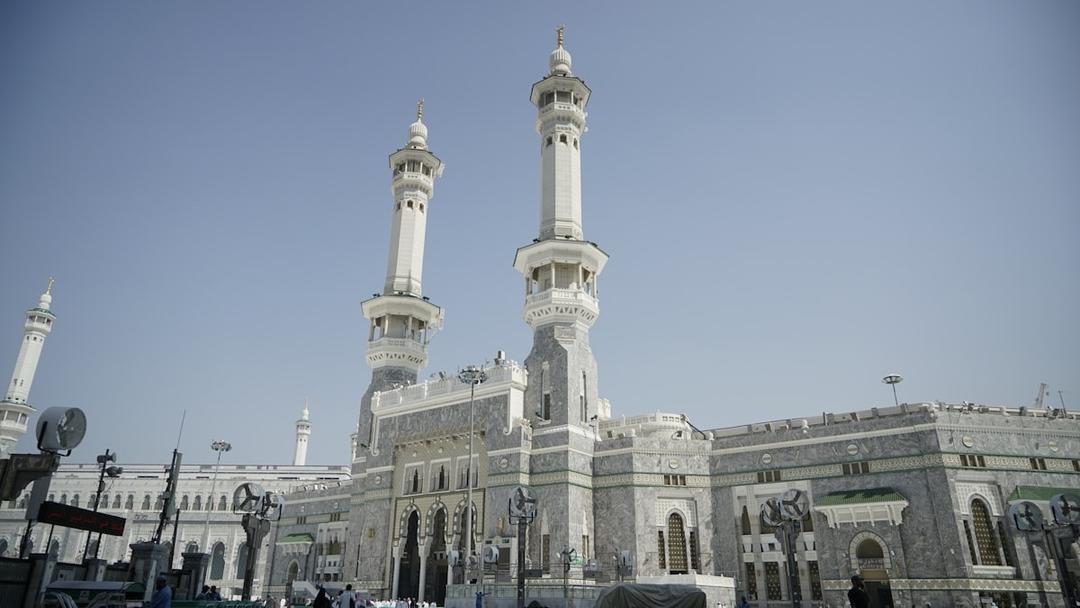
Photo by Afif Ramdhasuma on Unsplash
The Five Pillars and the Hajj Explained — Sacred Guide
religious context
Understanding the Hajj pilgrimage within the theological framework of Islam's Five Pillars and the broader structure of Muslim obligation.
Related traditions: Islam
Regions covered: Middle East
The Five Pillars of Islam
Islam organizes the obligations of the believer around five foundational practices known collectively as the arkān al-Islām — the Pillars of Islam. These pillars are not optional devotions but structural requirements that define Muslim identity and practice. They are: the shahada (declaration of faith), salat (prayer five times daily), zakat (charitable giving), sawm (fasting during Ramadan), and hajj (pilgrimage to Mecca). Together they create a framework of spiritual discipline that encompasses belief, worship, charity, self-denial, and physical journey — engaging the full range of human capacity in the service of devotion to God.
The pillars are not ranked hierarchically in most Islamic theology, but they do possess a logical sequence. The shahada — “There is no god but God, and Muhammad is the messenger of God” — constitutes the declaration of entry into Islam and undergirds all subsequent practice. Salat and zakat represent daily and annual obligations respectively, maintaining the believer’s connection to God and community through recurring practice. Sawm, observed annually during Ramadan, introduces temporal discipline — a designated period of heightened spiritual awareness. The Hajj, obligatory once in a lifetime for those with the means and health to undertake it, represents the culmination of this progression: a physical journey that demands the investment of time, resources, and bodily effort in an act of ultimate devotion.
The Hajj: Theology and Meaning
The Hajj occupies a distinctive position among the pillars because it is the only one that requires physical displacement. Prayer can be performed anywhere. Charity can be given from any location. Fasting is a practice of the body wherever the body happens to be. But the Hajj demands that the believer leave home, travel to a specific geographical location, and perform prescribed rituals at designated sites. This geographical specificity — the insistence that the pilgrim must be physically present in Mecca — reflects the Islamic understanding that certain places possess spiritual properties that cannot be replicated elsewhere.
The theological foundation of the Hajj rests on the figure of Ibrahim (Abraham), whom Islam regards as the patriarch of monotheism and the builder, with his son Ismail, of the Kaaba. The Hajj rituals recapitulate episodes from Ibrahim’s story: the circumambulation of the Kaaba honors the house he built; the running between Safa and Marwa commemorates Hagar’s search for water for her son; the stoning of the Jamarat reenacts Ibrahim’s rejection of Satan’s temptations; and the animal sacrifice recalls Ibrahim’s willingness to sacrifice his son in obedience to God’s command. By performing these rituals, the pilgrim physically inhabits the narrative of Ibrahim, transforming scriptural history into embodied present-tense experience.
The concept of ihram — the state of ritual consecration that pilgrims enter before beginning the Hajj rites — illustrates the pilgrimage’s transformative intention. The ihram garments, two seamless white cloths for men, strip away all markers of wealth, nationality, and social status. A king and a laborer, a doctor and a farmer, become visually indistinguishable. This enforced equality enacts the Islamic principle that all human beings are equal before God, a principle that is affirmed theologically throughout the year but given physical, visible expression only during the Hajj.
The Day of Arafat
The standing at Arafat (wuquf) on the ninth of Dhul Hijjah is considered the essential rite of the Hajj — the Prophet Muhammad stated that “Hajj is Arafat,” meaning that the entire pilgrimage depends on this single observance. The gathering on the Plain of Arafat, when over two million pilgrims stand in prayer and supplication from noon to sunset, is often described as a rehearsal for the Day of Judgment, when all of humanity will stand before God to account for their lives.
The theological weight of Arafat derives partly from its association with several foundational narratives. Tradition holds that it was at Arafat that Adam and Eve were reunited after their expulsion from Paradise. It was at Arafat that Ibrahim demonstrated his willingness to sacrifice his son. And it was at Arafat that the Prophet Muhammad delivered his Farewell Sermon in 632 CE, articulating principles of human equality, justice, and mutual obligation that Muslims regard as the summation of his prophetic message.
Conditions and Exemptions
Islamic jurisprudence has developed detailed criteria for determining who is obligated to perform the Hajj. The requirement applies to every Muslim who is: adult (having reached puberty), sane, free (not enslaved), physically able to travel, and financially capable of covering the expenses of the journey while maintaining their dependents at home. This last condition — known as istita’a (capability) — means that Muslims who cannot afford the pilgrimage without impoverishing their families are not required to perform it. The Hajj is an obligation for those with means, not a burden imposed on the poor.
Physical incapacity also exempts believers from the obligation. Those who are chronically ill, elderly and infirm, or otherwise unable to withstand the physical demands of the pilgrimage may designate a proxy (na’ib) to perform the Hajj on their behalf, provided the proxy has already fulfilled their own Hajj obligation. This provision reflects the Islamic principle that God does not burden a soul beyond its capacity, while ensuring that the spiritual benefits of the pilgrimage remain accessible even to those who cannot travel.
Women’s participation in the Hajj has been the subject of evolving jurisprudential discussion. Classical scholars generally required that women be accompanied by a mahram — a male relative within prohibited degrees of marriage — though the specific requirements vary among the four Sunni legal schools. In recent decades, Saudi regulations have been modified to allow women over forty-five to perform the Hajj without a mahram if traveling in an organized group, reflecting broader social changes while maintaining a framework of concern for women’s safety during the demanding pilgrimage journey.
Tawaf — The counterclockwise circumambulation of the Kaaba, performed seven times. Tawaf is required at multiple points during the Hajj and also during the Umrah (lesser pilgrimage). The circular motion symbolizes the unity of believers in the worship of one God and mirrors, in Islamic cosmology, the movement of celestial bodies around a divine center.
Sa’i — The walking seven times between the hills of Safa and Marwa, commemorating Hagar’s desperate search for water for her infant son Ismail. The ritual recalls a moment of maternal devotion and divine mercy — God responded to Hagar’s distress by causing the spring of Zamzam to flow, a spring that continues to provide water to pilgrims today.
Ihram — Both the state of ritual purity and the garments that mark it. Entering ihram involves a ritual washing, the donning of specified garments, and the declaration of intention (niyyah) to perform the Hajj. The restrictions of ihram — no perfume, no cutting of hair or nails, no sexual relations, no hunting — create a condition of simplicity and self-denial that prepares the pilgrim for sacred encounter.
Jamarat — The three stone pillars (now replaced by walls for safety) at Mina that represent the points where Satan attempted to tempt Ibrahim. The stoning ritual, performed with small pebbles collected at Muzdalifah, enacts the rejection of temptation and the triumph of obedience to God over self-interest.
Umrah — The lesser pilgrimage, which can be performed at any time of year and involves Tawaf and Sa’i but not the Arafat standing or the Mina rituals. Many Muslims combine Umrah with the Hajj or perform Umrah as an independent devotional act when the full Hajj is not yet feasible.
The Quranic foundations of the Hajj appear primarily in Surah Al-Baqarah (2:196-203) and Surah Al-Hajj (22:26-37), which describe the rituals, their Abrahamic origins, and their spiritual significance. The hadith literature, particularly the collections of Bukhari and Muslim, preserves detailed accounts of the Prophet Muhammad’s Farewell Pilgrimage, which serves as the normative model for Hajj practice. The jurisprudential tradition (fiqh) has elaborated these foundational sources into the comprehensive regulatory framework that governs modern Hajj practice.
- The Hajj Route — The physical journey of the Hajj pilgrimage
- Mecca — The holiest city in Islam and destination of the Hajj
- Islamic Pilgrimage Traditions — The broader context of sacred travel in Islam
- Ibn Battuta: The Pilgrim Traveler — A medieval Hajj that became one of history’s great journeys