7 Days in Sacred Japan: Kyoto, Kōya-san, and the Kumano Kodō
A week-long pilgrimage itinerary through Japan — Kyoto temples, Mount Kōya temple lodging, and a 3-day Kumano Kodō trek.
Seven days is the minimum needed to experience the three pillars of Japanese sacred geography: Kyoto’s urban temple landscape, Mount Kōya’s monastic mountain, and the Kumano Kodō’s ancient forest trails. This itinerary moves from city to mountain to trail, building the cultural and spiritual context in Kyoto before diving into the more remote and physically demanding experiences that follow.
Read our Japan planning guide for JR Pass logistics, temple lodging bookings, and trail preparation before departure.
Days 1-2: Kyoto Temple Circuit
Day 1: Eastern Kyoto
Begin at Fushimi Inari Taisha — the shrine of ten thousand vermillion torii gates winding up a forested mountainside. Arrive at opening (the shrine is accessible 24 hours, but 7:00am is ideal for photographs without crowds). The full loop to the summit takes 2-3 hours. The spiritual atmosphere deepens the higher you climb, as most visitors turn back after the first few hundred gates.
After Fushimi Inari, take the train to Kiyomizu-dera — the hillside temple famous for its wooden stage cantilevered over the valley. The temple’s founding legend, its association with the bodhisattva of compassion, and the Otowa waterfall at its base (where visitors drink from three streams representing longevity, academic success, and love) make this a concentrated introduction to Japanese Buddhist devotion.
Walk downhill through the preserved lanes of Higashiyama — Ninenzaka and Sannenzaka — to Gion, Kyoto’s traditional geisha district. The afternoon light on these streets is beautiful.
Day 2: Northern Kyoto and Zen
Start at Kinkaku-ji (the Golden Pavilion) — the gold-leafed temple reflected in its mirror pond. Arrive early for the smallest crowds. From here, take a bus or taxi to Ryōan-ji — the Zen temple famous for its rock garden. Fifteen stones arranged on raked white gravel have inspired contemplation and debate for five centuries. Sit on the viewing platform for at least fifteen minutes. The garden changes as your attention settles.
Afternoon: visit Daitoku-ji, a Zen temple complex with multiple sub-temples, each with its own garden, tea house, and atmosphere. Kōtō-in is the most beautiful — a moss-covered approach through a tunnel of maple trees leading to a simple tea garden.
End the day at the Arashiyama Bamboo Grove — the towering bamboo forest on Kyoto’s western edge. Walk through at dusk when the crowds thin and the light filters green through the stalks. The nearby Tenryū-ji temple garden, designed in the fourteenth century, connects the bamboo forest to the Zen tradition that shaped Kyoto’s spiritual landscape.
Day 3: Mount Kōya
Morning: Transit
Take the JR train from Kyoto to Osaka’s Namba station (approximately 50 minutes). Transfer to the Nankai Railway’s limited express to Gokurakubashi (90 minutes). The dramatic cable car ascent to Kōya-san takes 5 minutes and deposits you in a different world — a mountaintop temple complex founded by Kūkai (Kōbō Daishi) in 816 CE as the headquarters of Shingon Buddhism.
Afternoon: Okunoin Cemetery
Walk the 2-kilometer path through Okunoin — Japan’s most sacred cemetery. Over 200,000 memorial stones line a cedar-shaded path that leads to Kūkai’s mausoleum, where he is believed to rest in eternal meditation. The atmosphere is unlike anywhere else in Japan — moss-covered stone, ancient trees, and a silence that deepens as you approach the inner sanctuary. Do not photograph beyond the Torodo Hall (Hall of Lamps), where over 10,000 lanterns burn perpetually.
Evening: Temple Stay
Check into your shukubō (temple lodging). The evening unfolds at the temple’s rhythm: shōjin ryōri (Buddhist vegetarian dinner served in your room or a communal hall), a bath, and early sleep. Morning prayers begin at 6:00am — attendance is optional but deeply recommended. The chanting, the incense, the pre-dawn darkness inside the temple hall — this is the experience that distinguishes Japanese pilgrimage from tourism.
Day 4: Kōya-san to Kumano Kodō Trailhead
Morning
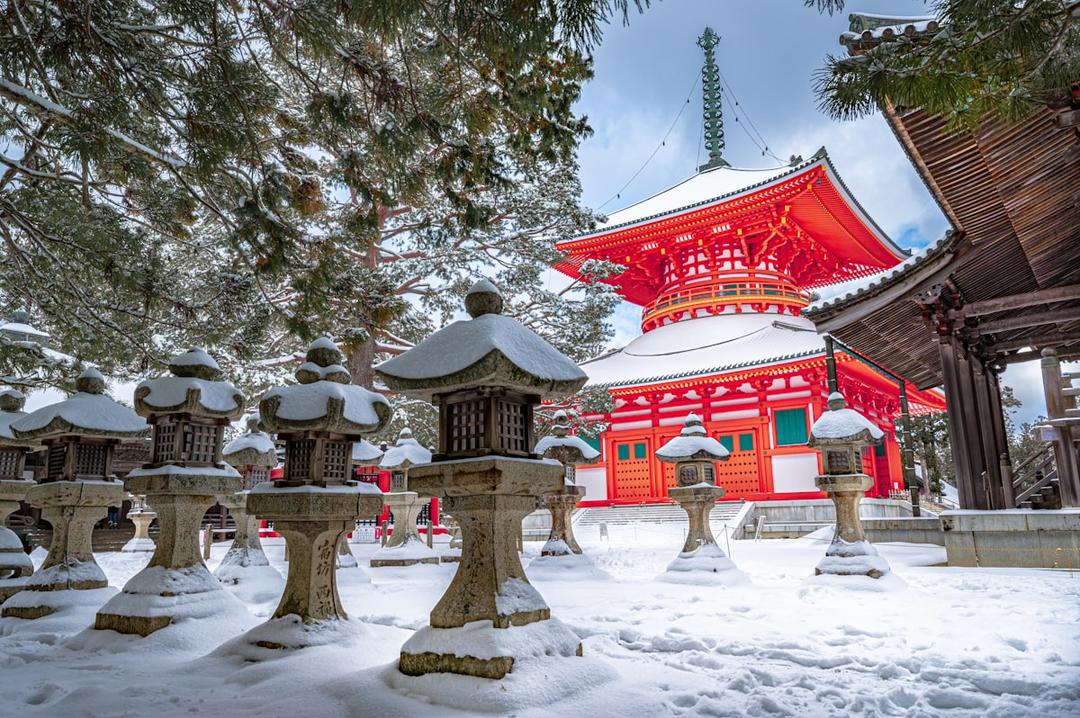
Attend morning prayers. After breakfast, visit the Danjō Garan — the sacred temple complex at Mount Kōya’s center, featuring the striking vermillion Konpon Daitō pagoda and the Kondō (Golden Hall).
Afternoon: Transit to Kii-Tanabe
Descend the cable car and take the Nankai Railway back to Osaka, then JR express to Kii-Tanabe (approximately 3.5 hours total transit). Kii-Tanabe is the gateway town to the Kumano Kodō Nakahechi route. Check into your accommodation, collect your luggage forwarding forms from the Tanabe City Tourism Bureau, and pick up your Kumano Kodō pilgrim stamp booklet.
Evening
Explore Kii-Tanabe’s waterfront. Stock up on trail snacks at the convenience store — the mountain villages ahead have limited shopping.
Days 5-7: Kumano Kodō Nakahechi Trek
Day 5: Takijiri-ōji to Chikatsuyu (12km, 5-6 hours)
Bus from Kii-Tanabe to the trailhead at Takijiri-ōji (40 minutes). Stamp your pilgrim booklet at the trailhead marker. The first day climbs through dense cedar forest on stone-paved paths, crosses the Takahara ridge with panoramic valley views, and descends to the small village of Chikatsuyu. This is the most elevation-intensive day — roughly 600 meters of climbing — and sets the physical tone for the trail.
Overnight at a minshuku in Chikatsuyu. Dinner and breakfast included.
Day 6: Chikatsuyu to Hongu (21km, 7-8 hours)
The longest day crosses several mountain passes through ancient forest. The trail alternates between centuries-old stone paths and forest track. Highlights include the Tsugizakura-ōji shrine (a designated ōji — one of the Kumano prayer sites spaced along the route) and the dramatic descent through rice terraces into the Kumano valley.
The day ends at Kumano Hongu Taisha — the grand shrine and spiritual climax of the Nakahechi route. The original shrine site at Ōyunohara, now marked by Japan’s largest torii gate standing in a river flood plain, is a 10-minute walk from the current shrine. Both sites deserve contemplation.
Overnight in the Hongu or Yunomine Onsen area. Yunomine Onsen is the oldest hot spring in Japan (over 1,800 years) and the only UNESCO-listed onsen in the world. The tiny Tsuboyu bathhouse (two-person capacity, book in advance) is a once-in-a-lifetime experience.
Day 7: Hongu to Nachi (Bus + 3km walk, half day)
Take the bus from Hongu to Kumano Nachi Taisha and Nachi Falls (approximately 1 hour). The 133-meter waterfall — the tallest single-drop waterfall in Japan — is sacred to both Shinto and Buddhist traditions. The vermillion pagoda framing the falls is one of Japan’s most iconic images.
Visit the shrine and the adjacent Seiganto-ji temple, then walk the stone staircase through ancient cedar forest to the base of the falls. This final descent completes the Kumano pilgrimage circuit.
Afternoon bus to Kii-Katsuura station, then JR train back to Osaka or Kyoto (3-4 hours).
Practical Notes
This itinerary requires a 7-day JR Pass plus separate Nankai Railway tickets for the Mount Kōya transit. Our Nakahechi walking guide covers each stage in detail with elevation profiles and guesthouse stops. Book temple lodging and Kumano Kodō guesthouses through Kumano Travel at least two weeks ahead — capacity is limited and beds fill quickly in spring and autumn.
Luggage forwarding on the Kumano Kodō must be arranged in advance through the Tanabe City Tourism Bureau. Walk with a daypack containing rain gear, water, snacks, and a warm layer.
For the broader spiritual context of this journey, explore the Buddhist pilgrimage traditions hub page. The Kumano Kodō’s twinning with the Camino de Santiago means completing both earns the Dual Pilgrim certificate.
Experiences and Tours
Kyoto: Fushimi Inari Shrine Walking Tour — From $39 · ★ 5.0 (63 reviews)
Kiyomizu Temple and Backstreets of Gion, Half Day Group Tour — From $59 · ★ 5.0 (51 reviews)
Kyoto: Zen Garden, Zen Mind (Private) — From $380 · ★ 5.0 (126 reviews)
Kyoto Hiking Tour: The Nature and Legends of Kurama and Kibune — From $190 · ★ 5.0 (77 reviews)
Private Tea Ceremony and Sake Tasting in Kyoto Samurai House — From $131 · ★ 5.0 (163 reviews)