The Three Festivals That Brought All of Israel to Jerusalem
religious context
How the biblical command of aliyah leregel created a pilgrimage system that defined Jewish worship, economy, and identity for a thousand years.
Related traditions: Judaism
Regions covered: Middle East
The Command to Ascend
The Hebrew Bible commands the Israelites to “appear before the Lord” three times each year, at the festivals of Pesach (Passover), Shavuot (Weeks), and Sukkot (Tabernacles). The phrase used — aliyah leregel, literally “ascending on foot” — encodes the physical reality of Jerusalem’s elevated geography: pilgrims from every direction climbed to reach the Temple. The command appears in Exodus 23:17, Exodus 34:23, and Deuteronomy 16:16, making it one of the most frequently reiterated obligations in the Torah. Unlike the daily and weekly rituals that could be performed anywhere, the pilgrimage festivals required physical presence at a specific location — first the Tabernacle, and eventually the Temple in Jerusalem.
The three festivals were not arbitrary selections. Each marked a turning point in the agricultural year and simultaneously commemorated a foundational event in Israelite history. Pesach, in the spring, recalled the Exodus from Egypt and coincided with the barley harvest. Shavuot, seven weeks later, celebrated the wheat harvest and was associated with the revelation of the Torah at Sinai. Sukkot, in the autumn, marked the final ingathering of crops and commemorated the forty years of wandering in the wilderness. This dual structure — agricultural and historical — meant that the pilgrimage festivals connected the land, the people, and their story in a single act of worship.
What the Pilgrimage Looked Like
The Mishnah, compiled around 200 CE but drawing on traditions from the Temple period, provides detailed descriptions of the pilgrimage experience. Pilgrims traveled in organized groups, often by village or region, singing the Psalms of Ascent (Psalms 120-134) as they neared Jerusalem. These fifteen psalms trace an emotional arc from distress and displacement to joy and arrival, functioning as a liturgical progression that mirrored the physical journey.
Arriving in Jerusalem, pilgrims needed to secure lodging — no simple matter when the city’s population multiplied by five or more during festivals. The Talmud records that Jerusalem’s residents were expected to offer hospitality freely, and that no one was ever turned away. The Mishnah notes that despite the enormous crowds, “no one ever said to his fellow, ‘The space is too cramped for me to lodge in Jerusalem’” — a statement understood either as miraculous or as testimony to the strength of communal obligation.
Each festival had its distinctive rituals. At Pesach, every family group slaughtered a lamb in the Temple courtyard and roasted it for the evening meal — the origin of the Seder. The logistics were staggering: Josephus reports that 256,500 lambs were slaughtered in a single Passover during the reign of Nero, implying a pilgrim population in the millions. While historians debate these numbers, the scale was unquestionably enormous, and the Temple’s drainage systems, designed to handle vast quantities of blood and water, testify to the engineering required.
The Shavuot pilgrimage centered on the offering of first fruits (bikkurim). The Mishnah describes the procession in vivid detail: pilgrims carried their offerings in baskets decorated according to their means — the wealthy in gold and silver baskets, the poor in wicker — led by an ox with gilded horns and accompanied by flute players. Each pilgrim recited a declaration from Deuteronomy 26, narrating the story of the Israelites from their origins as wandering Arameans through the Exodus and into the promised land. The first-fruits ceremony thus combined agricultural thanksgiving with historical memory, enacted in the physical presence of the Temple.
Sukkot was the longest and most elaborate of the three festivals, lasting seven days plus the concluding Shemini Atzeret. The water libation ceremony — in which priests drew water from the Pool of Siloam and poured it on the altar — was accompanied by celebrations of extraordinary intensity. The Mishnah reports that golden menorahs were lit in the Temple’s Court of Women, illuminating all of Jerusalem, and that sages and elders danced with torches while Levites played harps, lyres, cymbals, and trumpets on the fifteen steps leading down from the Court of Israel. The rejoicing continued through the night.
The Pilgrimage Economy
The three annual pilgrimages were the engine of Jerusalem’s economy. The city produced little — it had no port, no major trade routes, and limited agricultural land. What it had was the Temple, and the Temple drew pilgrims who needed food, lodging, animals for sacrifice, currency exchange, and ritual objects. The commercial infrastructure that supported the pilgrimage was substantial: markets for sacrificial animals operated on the Mount of Olives and within the Temple precincts, money changers converted foreign currencies into the Tyrian shekels required for the Temple tax, and workshops produced the lamps, incense, and offerings that pilgrims purchased.
The half-shekel Temple tax, collected annually from every adult Jewish male, provided the financial foundation for the Temple’s operations, including the daily sacrifices, maintenance of the building, and support of the priestly and Levitical families. The tax was collected in the diaspora as well as in the land of Israel, and its remittance to Jerusalem created a financial network that connected Jewish communities across the Mediterranean and Near East.
After the Destruction
The destruction of the Second Temple by Rome in 70 CE ended the pilgrimage system. There was no longer a Temple to ascend to, no altar on which to offer sacrifice, no priesthood to receive the pilgrim’s gifts. The loss was total and immediate, and its consequences shaped the development of Judaism for the next two millennia.
Rabbinic Judaism, which emerged from the ruins, preserved the pilgrimage festivals in transformed form. The Passover Seder replaced the paschal sacrifice with a structured meal of symbols and narratives. The synagogue service incorporated the festival liturgy that had been performed in the Temple. And the language of pilgrimage — aliyah, ascent, appearing before God — was retained in prayer, encoding the memory of what had been and the hope for what might be restored.
The phrase “Next year in Jerusalem,” recited at the conclusion of the Passover Seder, is the most familiar expression of this preserved longing. It is not merely a wish but a theological statement: the pilgrimage is incomplete, the Temple is absent, and the proper mode of Jewish worship remains interrupted. Every Seder, every festival prayer that mentions the Temple, every time a Jew turns toward Jerusalem in prayer, the pilgrimage system reasserts itself as memory, aspiration, and unfinished business.
Aliyah leregel — Literally “ascending on foot,” the term for the biblical obligation to appear at the Temple during the three pilgrimage festivals. The word aliyah (ascent) reflects both Jerusalem’s physical elevation and the spiritual dimension of approaching the divine presence. The same root gives modern Hebrew the word for immigration to Israel (making aliyah), connecting contemporary return with ancient pilgrimage.
Re’iyah — The obligation to “be seen” before God at the Temple. Rabbinic discussion explored the paradox: does the pilgrim come to see God, or to be seen by God? The answer, according to the Talmud, is both — “Just as He comes to see you, so He comes to be seen by you” — establishing the pilgrimage as a mutual encounter rather than a one-directional obligation.
Korban Hagigah — The festival peace offering that every pilgrim was required to bring, in addition to any personal sacrifices. The hagigah was eaten by the pilgrim and his family on the first day of the festival, creating a sacred communal meal within the Temple precincts that combined worship with celebration.
Ma’amad — The system by which ordinary Israelites participated in the daily Temple service even when not physically present in Jerusalem. The country was divided into twenty-four districts, each assigned a week during which its representatives stood in the Temple during the sacrifices while their communities at home fasted and prayed simultaneously. This system extended the pilgrimage principle beyond the three festivals into ordinary time.
The biblical foundations appear in Exodus 23:14-17, Exodus 34:22-24, and Deuteronomy 16:1-17. The Mishnah’s tractates Hagigah (festival offering), Bikkurim (first fruits), and Sukkah (booths) provide the most detailed descriptions of pilgrimage practice during the Second Temple period. Josephus, in both Jewish War and Jewish Antiquities, offers firsthand descriptions of festival crowds and Temple logistics. Modern archaeological work at the City of David and the Temple Mount periphery, particularly the excavation of the Pilgrims’ Road and the Southern Steps, has provided material evidence that supplements and sometimes corrects the literary sources.
- Jewish Pilgrimage Heritage — The broader tradition of Jewish sacred travel
- How Pilgrims Ascended the Temple Mount — The physical route of the ancient ascent
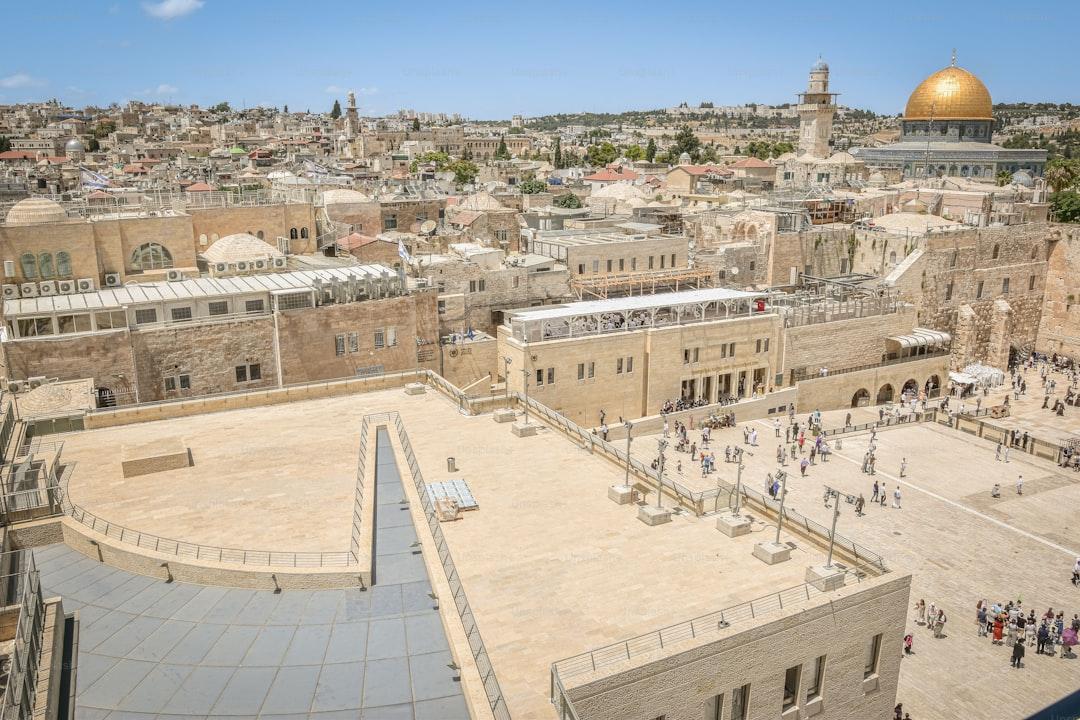
- Western Wall — Where the pilgrimage impulse is preserved today
- The Three Pilgrim Festivals of Judaism — The festival calendar in detail
- Jerusalem Old City — The city that received the pilgrims