Women Who Shaped the History of Pilgrimage
historical background
From Egeria to modern-day walkers, how women have navigated barriers and transformed pilgrimage traditions across centuries.
Related traditions: Christianity, Islam, Judaism, Buddhism, Hinduism
Regions covered: Global
The history of pilgrimage is often told through the journeys of men — Abraham, the Buddha, Muhammad, Francis of Assisi. But women have been pilgrims for as long as pilgrimage has existed, and their accounts, when they survive, reveal dimensions of sacred travel that male narratives often overlook: the negotiation of safety, the management of family obligations, the experience of devotion in a body that religious institutions have frequently regarded with suspicion.
The Ancient World
The earliest detailed pilgrimage account by a woman — and one of the earliest by anyone — comes from Egeria, a Roman woman (possibly a nun) who traveled through the Holy Land, Egypt, and Mesopotamia in the 380s CE. Her account, addressed to her “sisters” back home, combines practical observation with liturgical detail in a way that no other late antique source matches. She describes the route from Jerusalem to Mount Sinai, the Easter ceremonies in Jerusalem, and the daily worship patterns of the early Church with an ethnographer’s eye and a pilgrim’s devotion.
Egeria traveled with apparent freedom and considerable resources, suggesting elite social status. Her experience was not typical. For most women in the ancient world, long-distance travel was dangerous and socially constrained. Yet the evidence — archaeological as well as literary — shows that women participated in pilgrimage to Jerusalem, to the shrines of martyrs, and to local sacred sites from the earliest Christian centuries. Graffiti at ancient pilgrimage sites includes women’s names. The catacombs of Rome contain memorial inscriptions for female pilgrims.
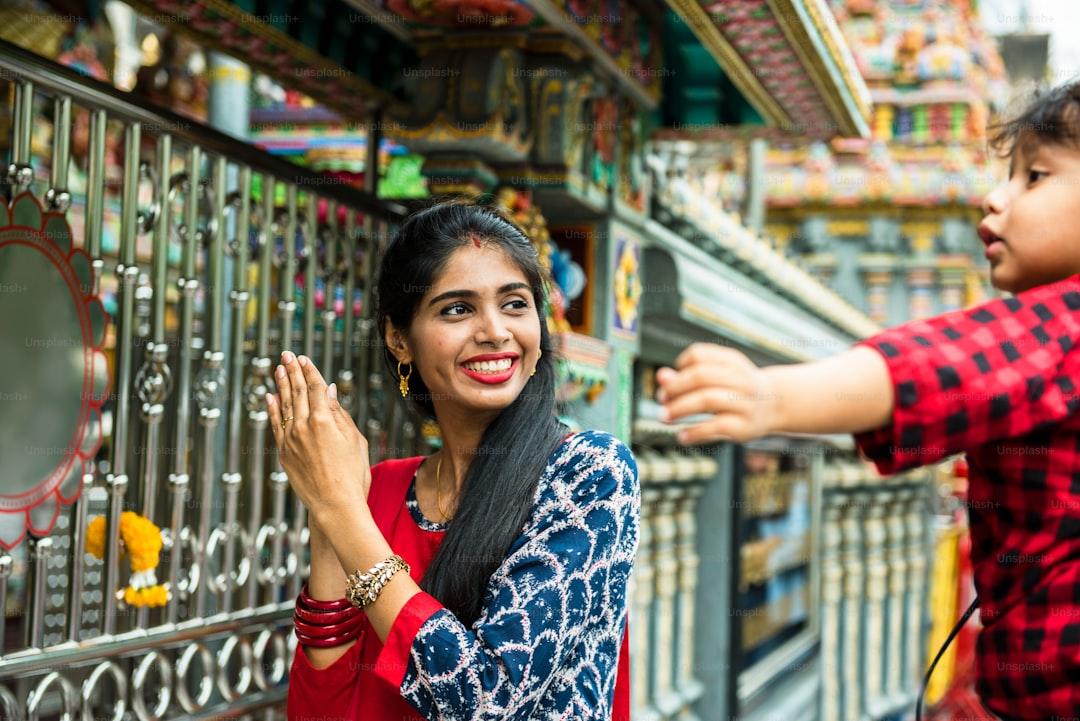
In the Hindu tradition, women have been pilgrims to Varanasi and other tirthas from the earliest recorded periods. The Mahabharata’s Tirtha-yatra Parva (Book of Pilgrimage) describes pilgrimage as available to all, regardless of gender or caste. In practice, women’s access to sacred sites has been shaped by local custom, family circumstances, and the physical demands of the journey — but the theological foundation for their participation was never seriously questioned.
Medieval Barriers and Breakthroughs
The medieval period saw both the intensification of pilgrimage culture and the tightening of restrictions on women’s movement. Church authorities expressed concern about women traveling without male supervision, partly from genuine concern for safety and partly from anxiety about female autonomy. The Fourth Lateran Council (1215) did not prohibit women’s pilgrimage but did attempt to regulate it. Local bishops sometimes refused women permission to make long journeys.
Despite these obstacles, women made up a significant portion of medieval pilgrims. Margery Kempe, the fifteenth-century English laywoman, traveled to Jerusalem, Rome, Santiago de Compostela, and numerous shrines in England and northern Europe. Her account — the earliest surviving autobiography in English — is remarkable not only for its devotional intensity but for its frank documentation of the resistance she faced: fellow pilgrims who found her weeping and visions embarrassing, churchmen who questioned her right to travel, and the constant practical challenge of financing her journeys without her husband’s cooperation.
Birgitta of Sweden (1303–1373) used pilgrimage as a vehicle for political and spiritual authority. Her pilgrimages to Santiago, Rome, and Jerusalem were accompanied by visions that she transcribed and disseminated, eventually forming the basis for her canonization. Birgitta founded the Bridgettine religious order and exercised influence over popes and kings — a level of public authority that pilgrimage helped make possible for a woman in an era that offered few other paths to it.
In the Islamic world, the Hajj has been obligatory for women who meet the conditions of health and financial means, just as for men. Classical jurisprudence required a mahram (male relative escort), and the four Sunni legal schools debated the specifics: whether an elderly woman needed a mahram, whether a group of women could serve as each other’s protection. In practice, women have performed the Hajj throughout Islamic history. The historical record preserves accounts of women who undertook the journey under conditions of considerable hardship and independence.
The Gendered Experience
Women’s pilgrimage accounts reveal experiences that differ in texture from men’s, even when the route is the same. Physical safety is a recurring concern — not abstract but practical. Margery Kempe’s account includes episodes of threatened assault. Modern female pilgrims on the Camino de Santiago report navigating the tension between the route’s culture of openness and the reality of walking alone as a woman. These experiences do not define women’s pilgrimage, but they shape it in ways that are absent from most male accounts.
Fertility, pregnancy, and childbirth connect women to certain pilgrimage sites with particular intensity. Rachel’s Tomb near Bethlehem has drawn Jewish women praying for children for centuries. Lourdes became especially associated with healing after Bernadette Soubirous’s visions, and women seeking cures for themselves or their children have constituted a large portion of its pilgrims. In Hindu tradition, pregnant women visit temples and tirthas seeking blessings for safe delivery. These connections between women’s bodily experience and sacred geography create pilgrimage traditions that are specifically — though not exclusively — female.
The emotional register of women’s pilgrimage writing also tends to differ. Egeria’s detailed observation, Margery Kempe’s raw emotional disclosure, and the Tibetan yogini Machig Labdrön’s integration of pilgrimage with inner contemplative practice all represent modes of spiritual expression that expand the range of what pilgrimage literature can convey. These are not lesser accounts by virtue of their difference from male models; they represent dimensions of the pilgrimage experience that the tradition’s dominant narratives have tended to undercount.
Modern Transformations
The twentieth and twenty-first centuries have seen a significant shift in women’s access to and experience of pilgrimage. Saudi Arabia has progressively relaxed the mahram requirement for the Hajj, now permitting women over forty-five to travel in organized groups without a male relative. The Camino de Santiago, which was overwhelmingly male into the 1990s, now sees roughly equal participation by gender. Women walk the Shikoku 88 Temple circuit, trek to Kailash, and undertake the Char Dham pilgrimage in numbers that would have been unusual a generation ago.
This shift reflects broader social changes — increased female mobility, financial independence, and the erosion of norms that restricted women’s travel. But it also reflects something specific to pilgrimage: the path is, in principle, available to anyone willing to walk it. The egalitarian promise embedded in pilgrimage traditions — that the road treats everyone the same — has always been more aspiration than reality, but it has served as a counterweight to the restrictions that women faced in other areas of religious life.
Contemporary women pilgrims frequently describe the journey as a space of autonomy and self-determination. Walking alone or in self-chosen company, making decisions about pace and rest, navigating physical challenges on their own terms — these experiences can carry particular significance for women whose daily lives involve constant negotiation of others’ needs and expectations. The pilgrimage path, for all its physical difficulty, offers a form of freedom.
Mahram — In Islamic jurisprudence, a male relative within prohibited degrees of marriage (father, brother, son, husband, uncle, nephew) who traditionally accompanies a woman on travel, including the Hajj. The requirement has been progressively relaxed in recent decades, with Saudi authorities now permitting women over forty-five to travel in organized groups.
Peregrinatio — The Latin term for the early Christian practice of religious wandering, which could mean both a specific pilgrimage to a holy site and a broader spiritual discipline of displacement from home. Women like Egeria practiced peregrinatio as a form of devotion that combined travel, liturgical observation, and spiritual seeking.
Tirtha-yatra — The Hindu practice of pilgrimage to sacred crossing places (tirthas), described in the Mahabharata and other texts as spiritually meritorious for all persons regardless of gender or caste. Women’s participation in tirtha-yatra has been documented from the earliest historical periods.
Egeria’s travel account survives in a single manuscript (the Codex Aretinus) and is available in numerous modern translations. Margery Kempe’s Book was rediscovered in 1934 and is the earliest known autobiography in English. Diana Webb’s Pilgrims and Pilgrimage in the Medieval West (2001) provides context for women’s medieval pilgrimage. For Islamic perspectives, see Amira El-Azhary Sonbol’s Women, the Family, and Divorce Laws in Islamic History (1996) and recent reports on Saudi Hajj policy reforms. The anthropological literature on women and pilgrimage includes Jill Dubisch and Michael Winkelman’s Pilgrimage and Healing (2005).