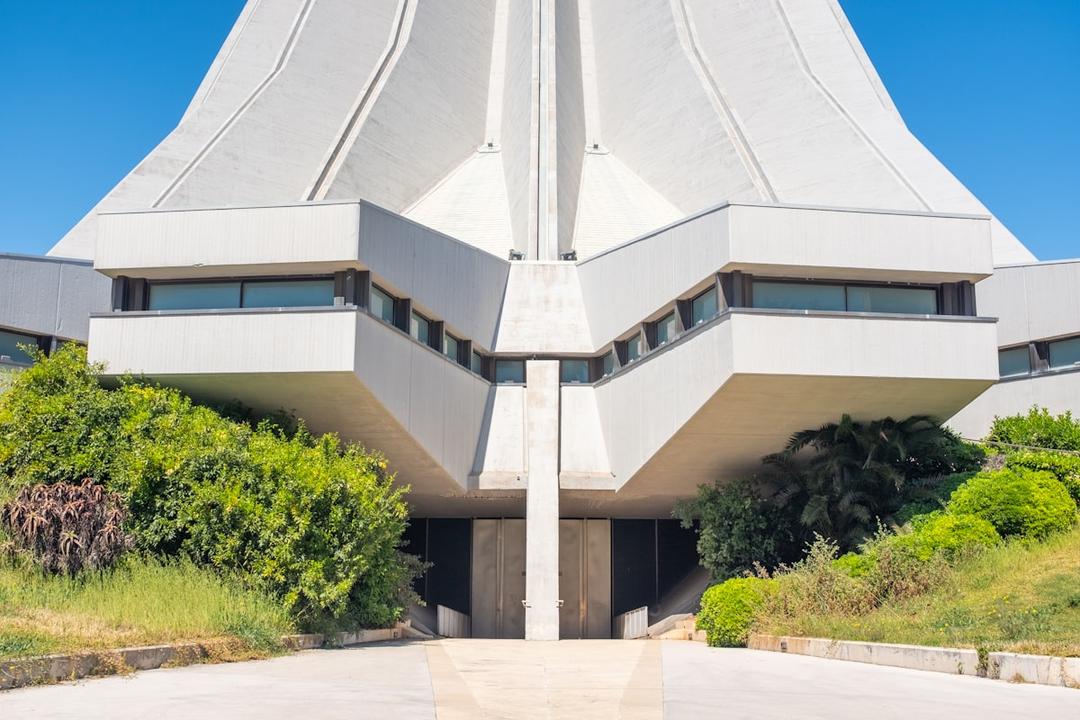
Photo by Bernard Hermant on Unsplash
Pilgrimage and Tourism in the Modern Era
cultural overview
How the boundaries between sacred travel and secular tourism have blurred, and what this means for pilgrimage sites, local communities, and the pilgrims...
Related traditions: Christianity, Islam, Buddhism, Judaism, Hinduism
Regions covered: Europe, Middle East, South Asia, East Asia
The Blurring of Boundaries
The distinction between pilgrimage and tourism, which seemed clear enough to medieval travelers, has become one of the most contested questions in the contemporary study of sacred travel. When a non-religious hiker walks the Camino de Santiago for personal challenge, is that pilgrimage? When a devout Catholic visits the Vatican and also tours the Colosseum, does the tourist activity diminish the pilgrim experience? When a Japanese retiree completes the Shikoku 88 Temple circuit by tour bus, collecting stamps at each temple without walking between them, does the absence of physical journey disqualify the experience as pilgrimage? These questions have no universally agreed answers, and their very intractability reveals something important about how modern societies relate to sacred practice.
The sociologist Erik Cohen proposed a useful continuum in 1992, ranging from the “pilgrim” (whose journey is entirely sacred in motivation) to the “tourist” (whose journey is entirely secular) with several intermediate categories — the “pilgrim-tourist,” the “traveler,” and the “tourist-pilgrim” — representing varying blends of sacred and secular motivation. Most contemporary visitors to pilgrimage sites, Cohen argued, fall somewhere in the middle of this spectrum, combining religious devotion with cultural curiosity, physical challenge, social experience, and aesthetic appreciation in proportions that shift throughout their journey and that they themselves may struggle to articulate.
The Scale of Modern Pilgrimage
The numbers involved in contemporary pilgrimage dwarf anything the medieval world could have imagined. The Hajj draws over two million participants annually. The Kumbh Mela in India attracts tens of millions over its multi-week duration, with single-day attendances that may exceed fifty million — making it the largest peaceful gathering of human beings on earth. Lourdes receives approximately six million visitors per year. The Camino de Santiago issued nearly 450,000 Compostela certificates in 2023, up from fewer than 3,000 in 1986. Shikoku’s pilgrim numbers, while smaller, have grown steadily since international guidebooks became available.
These numbers are made possible by transportation technologies that the founders of pilgrimage traditions could not have envisioned. Air travel allows a Muslim from Indonesia to reach Mecca in hours rather than months. High-speed rail brings Catholic pilgrims from Paris to Lourdes in six hours. Tour buses deposit visitors at the door of temples that mountain ascetics once reached only after days of climbing. The ease of modern travel has democratized pilgrimage, making sacred journeys accessible to populations that distance, expense, or physical limitation would previously have excluded. It has also raised questions about whether ease of access diminishes the transformative potential that difficulty and duration once provided.
Economic Dimensions
Pilgrimage has always had economic dimensions — medieval Christendom’s network of hospices, relic displays, and souvenir shops demonstrates that the commercial infrastructure of sacred travel is not a modern invention. But the scale and sophistication of the contemporary pilgrimage economy represents something qualitatively different. Lourdes’ commercial district generates tens of millions of euros annually from the sale of religious articles. The Hajj contributes significantly to Saudi Arabia’s non-oil revenue. The Camino de Santiago has become a major economic driver for rural communities in northern Spain that would otherwise face severe depopulation.
The economic impact of pilgrimage on local communities is complex. Tourism revenues provide employment, sustain services, and incentivize the preservation of historical buildings and cultural traditions that might otherwise be lost. But the commercialization of sacred sites can also degrade the very qualities that make them attractive. The tension between preservation and development, between authenticity and accessibility, between serving pilgrims and serving tourists, plays out differently at each site but follows recognizable patterns worldwide.
Heritage Management and UNESCO
The inscription of pilgrimage routes and sacred sites as UNESCO World Heritage Sites has introduced a new institutional framework into the management of sacred spaces. The Camino de Santiago (inscribed 1993), the Kumano Kodō and Mount Kōya (2004), and numerous individual pilgrimage destinations carry the UNESCO designation, which brings international recognition, preservation obligations, and — inevitably — increased visitor numbers. The tension between heritage management and religious function creates governance challenges, as secular preservation bodies and religious authorities negotiate competing visions of what a site is for and how it should be maintained.
The concept of “outstanding universal value,” which underpins UNESCO inscription, sits in an uneasy relationship with the particular religious claims that give pilgrimage sites their significance. A site that is inscribed for its architectural or historical value may be experienced by pilgrims primarily as a living place of worship. The priorities of heritage conservation — maintaining physical fabric, managing visitor flows, restricting commercial development — do not always align with the priorities of religious practice, which may value the ongoing use of buildings over their preservation in a particular historical state.
Digital Pilgrimage and Virtual Access
The COVID-19 pandemic accelerated a trend that had been developing for years: the use of digital technology to provide virtual access to pilgrimage sites. Live-streamed liturgies from the Vatican, virtual tours of the Hajj sites, and online circumambulations of Buddhist stupas offered substitute experiences for those unable to travel. The theological status of these virtual practices remains debated — can a digital experience fulfill a pilgrim’s intentions? Does watching a live-stream of the Easter liturgy at the Holy Sepulchre provide any of the spiritual benefits attributed to physical presence?
Most religious authorities have been cautious in their response, allowing that virtual access provides some spiritual benefit while maintaining that physical presence retains a significance that digital mediation cannot replicate. This position reflects an understanding of pilgrimage that is deeply embodied — the theological significance of walking, touching, breathing the air of a sacred place depends on the pilgrim’s physical presence in a way that information transmission cannot substitute. The distinction between information about a place and experience of a place proves robust even in an age of high-resolution video and virtual reality.
Sustainability and Carrying Capacity
The environmental impact of mass pilgrimage has become an increasingly pressing concern. The carbon footprint of long-distance air travel to pilgrimage destinations, the waste generated by millions of visitors at sacred sites, the erosion of fragile s by foot traffic, and the resource demands of large-scale accommodation and food service all present sustainability challenges that pilgrimage traditions must address.
Some pilgrimage communities have begun to respond. The Camino de Santiago has developed municipal albergue (hostel) systems that promote lower-impact accommodation. The Kailash region has introduced waste management protocols for the kora circuit. The Kumano Kodō’s management model emphasizes community-based tourism that distributes economic benefits while limiting environmental impact. But the fundamental tension between the religious imperative to welcome all seekers and the ecological reality of finite carrying capacity remains unresolved at most major pilgrimage sites.
The Future of Pilgrimage
The persistence and growth of pilgrimage in an increasingly secular world suggests that the practice addresses needs that secularization has not eliminated. The desire for meaningful physical experience in a digitally mediated world, the hunger for community in an era of social fragmentation, the search for purpose and transformation that consumer culture fails to provide — all of these contemporary needs find expression in the ancient practice of sacred travel. Whether framed in traditional religious terms or in the secular vocabulary of personal growth and cultural exploration, the impulse to leave home, endure difficulty, and arrive at a place that carries meaning beyond the ordinary shows no sign of diminishing.
The challenge for the coming decades will be to manage this impulse in ways that preserve the qualities that make pilgrimage meaningful while adapting to the realities of mass participation, environmental constraint, and cultural change. The pilgrimage sites that succeed will be those that find ways to honor their sacred heritage while serving contemporary seekers — maintaining the depth that makes the journey worthwhile while managing the breadth that modern accessibility makes possible.
Carrying Capacity — The maximum number of visitors a site can accommodate without unacceptable degradation of either the physical environment or the visitor experience. Determining carrying capacity for pilgrimage sites is complicated by the religious dimension — restricting access to a sacred site raises different ethical questions than restricting access to a national park.
Commodification — The process by which sacred experiences and objects are transformed into commercial products. The sale of Lourdes water, Camino souvenirs, or Hajj packages raises questions about whether commercial transactions enhance or undermine the spiritual dimensions of pilgrimage.
Authenticity — A contested concept in pilgrimage studies, referring to the perceived genuineness of a sacred site or pilgrim experience. Debates about authenticity — whether a rebuilt shrine is “real,” whether a motorized pilgrim’s experience is “genuine” — reveal underlying assumptions about what gives pilgrimage its value.
Dark Tourism — The practice of visiting sites associated with death, suffering, or tragedy. Some pilgrimage destinations, particularly those associated with martyrdom or historical violence, overlap with dark tourism, raising questions about the relationship between devotion and spectacle.
Erik Cohen’s foundational work on pilgrim-tourist typologies appears in “Pilgrimage and Tourism: Convergence and Divergence” (1992). Victor and Edith Turner’s Image and Pilgrimage in Christian Culture (1978) established the anthropological study of pilgrimage as a modern academic field. Simon Coleman and John Eade’s edited volume Reframing Pilgrimage (2004) provides critical perspectives on contemporary pilgrimage practice. For economic dimensions, Noga Collins-Kreiner’s research on pilgrimage tourism management offers data-driven analysis of the commercial pilgrimage sector.
- Kora Around Mount Kailash — A pilgrimage where access management is a critical issue
- Lourdes — A site where commercialization and devotion coexist in visible tension
- Camino de Santiago — The pilgrimage route most associated with modern revival
- Abraham Path — A contemporary route designed for interfaith cultural exchange