
Jerusalem
Complete Guide to Jerusalem's Old City
Navigate Jerusalem's four quarters, visit the holiest sites, and experience 3,000 years of history. Essential tips for visiting the Western Wall, Church of the Holy Sepulchre, and more.
Overview & Orientation
Jerusalem's Old City is a 0.9 square kilometer walled area containing sites sacred to Judaism, Christianity, and Islam. Despite its small size, you could spend weeks exploring its labyrinthine streets and still discover new corners.

The city is divided into four quarters—Jewish, Christian, Muslim, and Armenian—each with its own character, holy sites, and atmosphere. The walls you see today were built by Suleiman the Magnificent in the 16th century, but settlement here dates back over 3,000 years.
Key landmarks: The Western Wall, Church of the Holy Sepulchre, Dome of the Rock, Al-Aqsa Mosque, Via Dolorosa, and the ancient Cardo are all contained within these walls.
The Four Quarters
Jewish Quarter
The Jewish Quarter was almost entirely destroyed in 1948 and has been beautifully reconstructed since 1967. It's the most modern-feeling area, with clean streets and good accessibility.
Must-see: The Western Wall (Kotel), the ancient Cardo, the Hurva Synagogue, and the archaeological excavations revealing layers of history.
Christian Quarter
The Christian Quarter surrounds the Church of the Holy Sepulchre and contains the final stations of the Via Dolorosa. It's a maze of narrow streets filled with religious shops and pilgrim hostels.
Must-see: Church of the Holy Sepulchre (site of Jesus' crucifixion and burial), Via Dolorosa's Stations of the Cross, and the Lutheran Church of the Redeemer's tower (best panoramic view).
Muslim Quarter
The largest and most densely populated quarter, the Muslim Quarter is a sensory experience—bustling markets, spice stalls, and calls to prayer echoing through the streets.
Must-see: The beginning of the Via Dolorosa, the Damascus Gate (most impressive entrance to the Old City), and the vibrant souk.
Armenian Quarter
The smallest and quietest quarter houses one of the oldest Armenian diaspora communities in the world, dating to the 4th century.
Must-see: St. James Cathedral (open for services only), the Armenian Museum, and the evocative Zion Gate with its bullet holes from 1948.
Major Holy Sites
Western Wall (Kotel)
The holiest site in Judaism—the last remnant of the Second Temple's retaining wall. Open 24/7 and free. Modest dress required; men must cover their heads (paper kippahs provided). The Western Wall Tunnels tour reveals the wall's full ancient length underground.
Church of the Holy Sepulchre
The holiest site in Christianity, marking the locations of Jesus' crucifixion (Golgotha) and tomb. Six Christian denominations share custody. Arrive early or late to avoid crowds. The Edicule (tomb structure) often has long lines.

Temple Mount / Haram al-Sharif
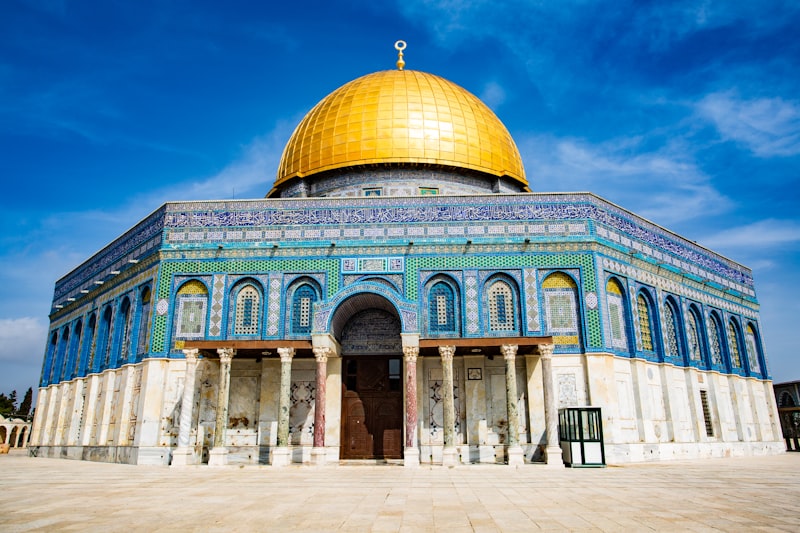
The holiest site in Judaism and third holiest in Islam. The golden Dome of the Rock and Al-Aqsa Mosque are iconic. Non-Muslim visitors have limited access (see FAQ). Security screening required.
Practical Information
Getting There
From Tel Aviv: 1 hour by car/bus. Ben Gurion Airport is 45 minutes away. The Old City is pedestrian-only; stay outside the walls or at one of the few hotels within them.
Best Gates to Enter
Jaffa Gate: Best for Christian and Armenian quarters, close to parking and the Tower of David. Damascus Gate: Most dramatic entrance, leads to Muslim Quarter. Dung Gate: Closest to Western Wall.
How Long to Spend
Half day: One quarter + major site. Full day: Hit the highlights. 2+ days: Explore properly with time to absorb the atmosphere.